
Published on
September 10, 2026
Designing Accountability into Systems Instead of Demanding It
Accountability is one of those words that tends to appear when work is already under pressure. A deadline slips, a decision is missed, a client update goes out late, and suddenly the conversation becomes about who was responsible.
That is understandable, but it is also late. By the time accountability becomes the main topic, something in the system has usually already failed.
In many teams, accountability is treated like a personal trait. Some people “have it”, some people do not, and leaders are expected to demand more of it when delivery starts to wobble. But accountability is not only a matter of character. It is also a matter of design.
People are more likely to follow through when the system around them makes ownership clear, progress visible, and feedback regular. They are more likely to take responsibility when they know what is theirs to move, what good looks like, where the work stands, and when to raise a hand. If those things are missing, demanding accountability usually creates more pressure, not better execution.
Accountability Breaks When the System Is Unclear
Most accountability problems do not begin with someone deciding not to care. They begin with ambiguity.
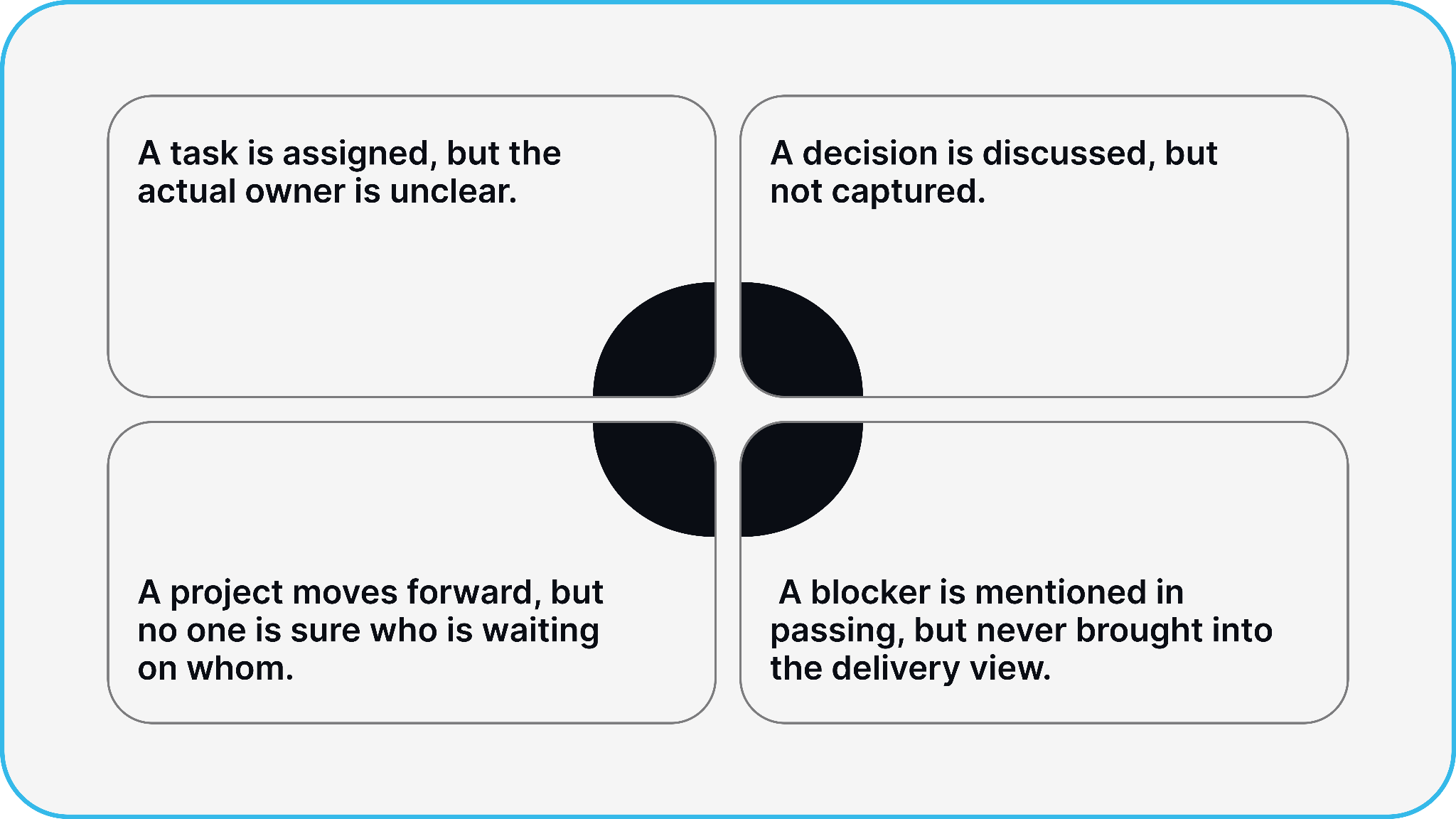
A task is assigned, but the actual owner is unclear. A decision is discussed, but not captured. A project moves forward, but no one is sure who is waiting on whom. A blocker is mentioned in passing, but never brought into the delivery view. Everyone is busy, everyone is trying, but the system does not make responsibility easy to see.
That is when accountability becomes personal. People start asking why someone did not follow up, why someone did not know, or why someone did not escalate earlier. Sometimes those questions are fair, but often they are late. A better question is: did the system make the right behaviour easy?
If ownership was vague, visibility was poor, and feedback only happened after something slipped, then the team was relying on memory, personality, and individual vigilance. That might work for a while, especially in small teams, but as work becomes more complex, it becomes fragile.
McKinsey has written about how clear decision rights and role clarity help organisations move faster and make accountability more transparent. The point is simple: people cannot consistently own what the system has not clearly defined.
Accountability Needs Visibility
You cannot hold a team accountable for work that no one can see clearly.
Visibility is not surveillance. It is not watching people more closely or turning delivery into performance theatre. Real visibility means the state of the work is clear enough for the right people to make the right decisions at the right time.
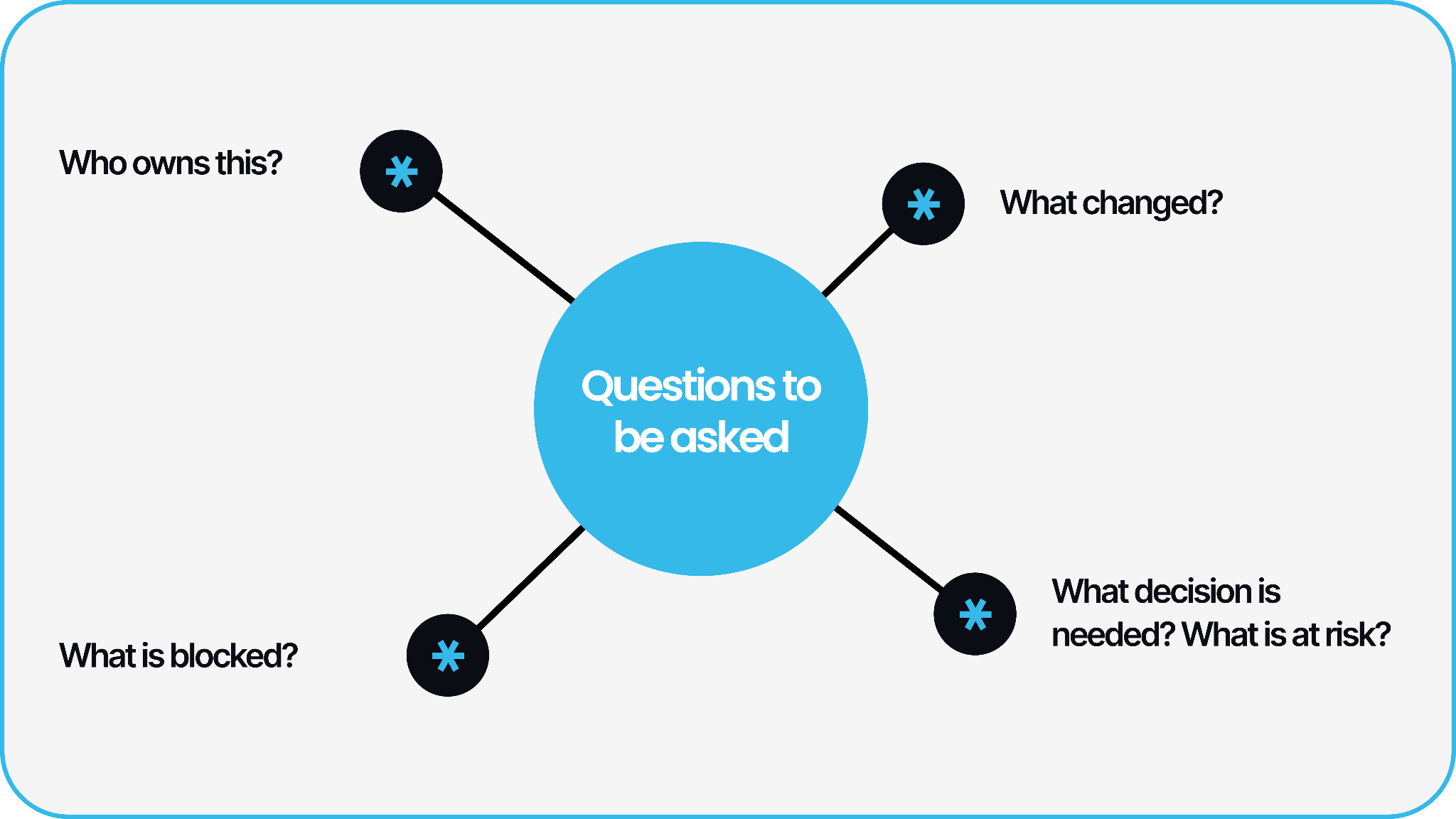
Who owns this? What is blocked? What changed? What decision is needed? What is at risk? What has already been agreed? When those answers are easy to find, accountability becomes less emotional. The conversation moves away from blame and towards action. The team can see the gap, understand the impact, and decide what needs to happen next.
Without visibility, accountability becomes reactive. Leaders find out too late. Team members defend themselves. Stakeholders lose confidence. The work becomes harder to discuss because no one is starting from the same picture.
Google’s rework research on team effectiveness identifies structure and clarity as one of the key dynamics of effective teams, alongside psychological safety and dependability. Teams perform better when goals, roles, and plans are clear enough for people to understand how their work connects.
Ownership Must Be Designed Before Work Starts
One of the biggest mistakes teams make is trying to assign accountability after the work is already in motion. By then, assumptions have already formed. One person thinks another person owns the next step. A team assumes the client will respond. A founder assumes the delivery lead has captured the risk. The delivery lead assumes the product owner has confirmed the decision.
This is how gaps open.
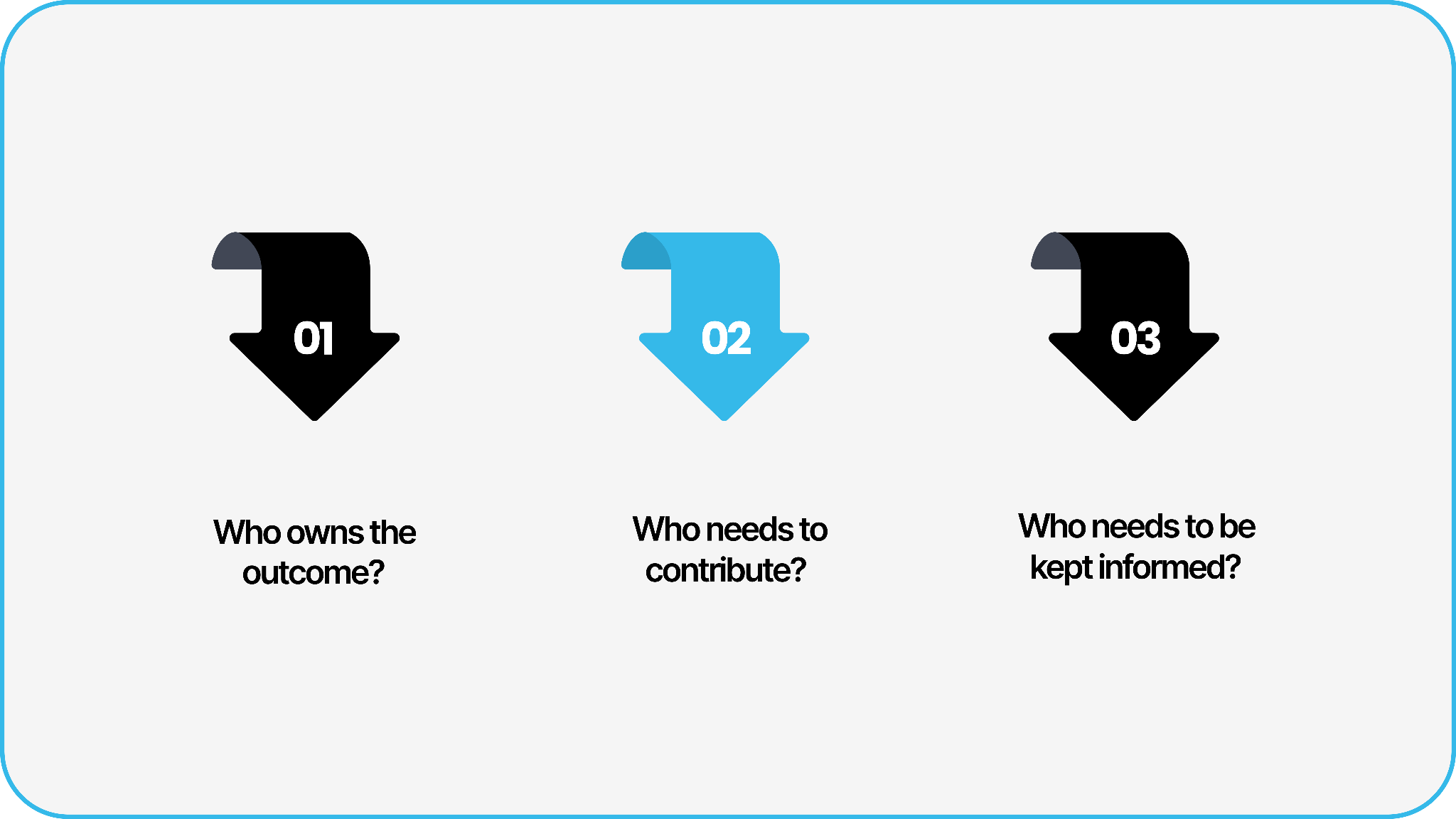
Ownership has to be designed early, and it does not need to be complicated. Every meaningful piece of work should answer three questions before it moves too far: who owns the outcome, who needs to contribute, and who needs to be kept informed?
This does not mean every task needs a heavy framework. It means the team should not leave ownership to interpretation. A clear owner does not have to do everything, but they are responsible for moving the outcome, surfacing blockers, and making sure the next step is visible.
That distinction matters. Accountability is not the same as doing all the work. It is owning the movement of the work.
Feedback Loops Keep Accountability Alive
Even when ownership is clear at the start, delivery still changes. Priorities shift. People get blocked. Clients respond late. Assumptions change. Something that looked simple becomes more complex. If the system does not create regular feedback loops, accountability starts to decay.
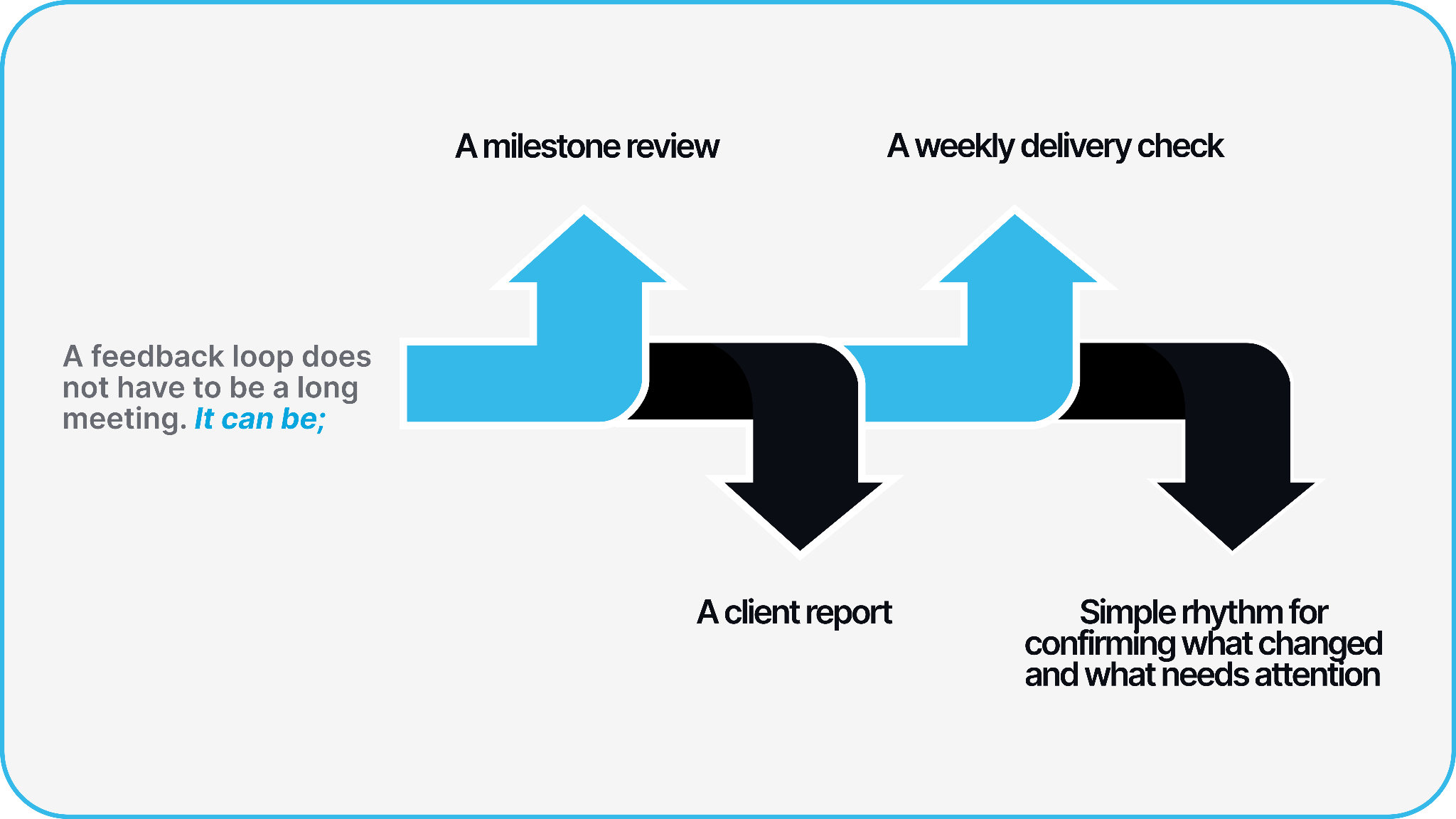
A feedback loop does not have to be a long meeting. It can be a milestone review, a weekly delivery check, a client report, a blocker review, or a simple rhythm for confirming what changed and what needs attention. The purpose is not to create ceremony. The purpose is to keep reality close.
Harvard Business Review has argued for accountability with compassion rather than fear, pointing to clear expectations and frequent, low-impact feedback as a better path than pressure and punishment. That framing matters because accountability should help people correct course early, not wait until failure becomes expensive.
When feedback is regular, accountability feels less like judgement. It becomes part of how the team learns, adjusts, and keeps work moving.
A Simple Model for Accountable Delivery
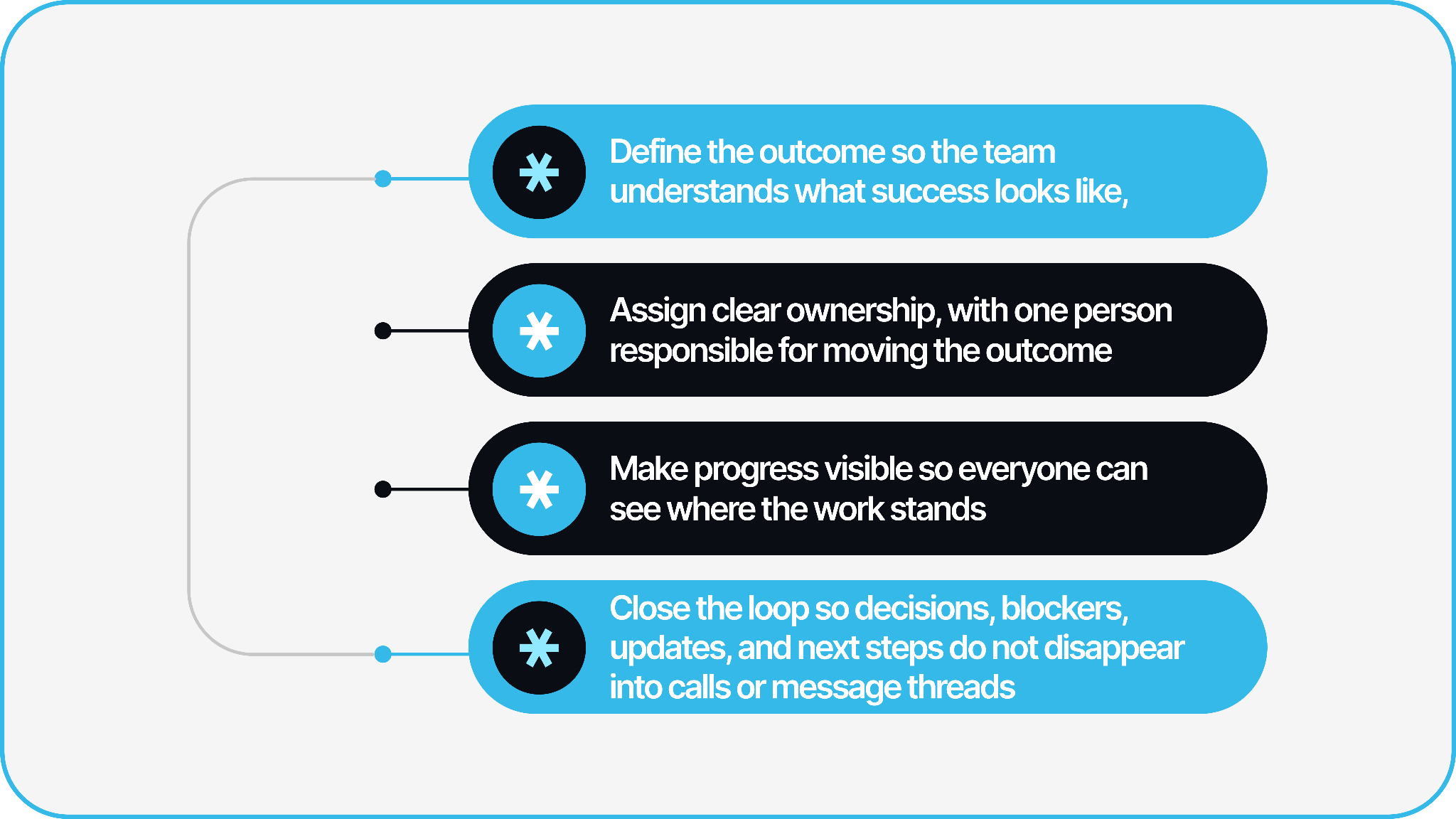
Teams do not need to overcomplicate this. A practical accountability system can be built around four simple loops.
First, define the outcome so the team understands what success looks like, not just what task needs to be done. Then assign clear ownership, with one person responsible for moving the outcome even if several people contribute to the work. Next, make progress visible so everyone can see where the work stands, what is blocked, what changed, and what needs attention. Finally, close the loop so decisions, blockers, updates, and next steps do not disappear into calls or message threads.
This model changes the tone of accountability. The leader is no longer just asking people to “be more accountable”. The team is building the conditions that make accountability easier to practise.
Building the Accountability Layer
Wholistic is built around a simple belief: execution improves when context, ownership, and progress are easier to see.
In many teams, accountability fails because the work is spread across too many places. Decisions sit in one thread. Resources sit in another tool. Updates live in reports. Blockers are mentioned in meetings. Milestones exist, but the story around them is fragmented.
This is where the accountability layer matters. Teams do not only need a record of tasks. They need a clearer view of what is owned, what has changed, what is blocked, and what needs a decision. When those pieces are visible together, accountability becomes less dependent on one person remembering everything or chasing everyone manually.
The goal is not to monitor people more closely. The goal is to make the work easier to own.
Accountability Is an Operating Design
Leaders will always need to set expectations, and people will always need to take responsibility for their commitments. But accountability becomes much stronger when it is designed into how the team works.
Clear visibility. Clear ownership. Regular feedback loops. Shared context. These are not soft ideas. They are operating conditions. When they are missing, accountability becomes something leaders have to demand. When they are present, accountability becomes something the system helps produce.
That is the shift: not accountability as pressure, but accountability as design.


Ready to bring your best work together?
Sign up today and experience how Wholistic can transform your team's productivity!


