
Published on
April 29, 2026
From Consulting to Product: When Services Reveal a System Gap
.jpg)
The Advantage of Seeing the Same Problem Many Times
Consulting gives you a perspective that building inside a single organisation rarely provides: repetition across environments.
When you work within one company, friction often feels contextual. You assume challenges are cultural, team-specific, or industry-driven.
When you operate across multiple clients, industries, and delivery environments, a pattern emerges.
The same problems repeat: different tools, different sectors, different leadership styles, but identical structural gaps.
Over the years, through delivery work across fintech, financial services, and technology teams, one observation became unavoidable. The recurring strain was rarely about talent or ambition. It was about systems that were never designed to operate at scale.
When the same constraint surfaces across independent environments, it is no longer incidental. It is structural.
Why Consulting Reveals Systemic Gaps
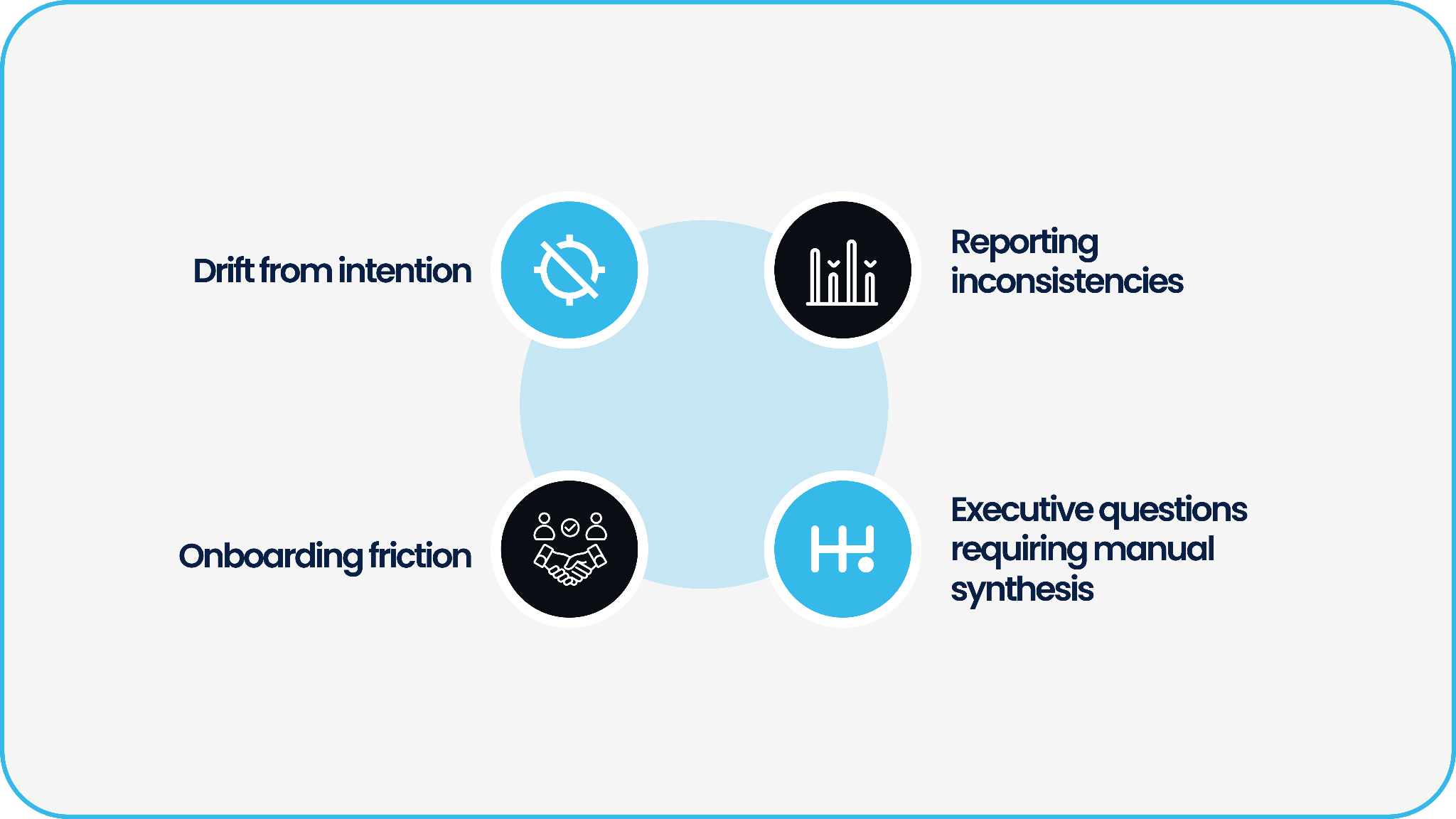
In consulting, repeated exposure across clients makes patterns visible that internal roles rarely surface. You start noticing:
- Drift from intention
- Onboarding friction
- Reporting inconsistencies
- Executive questions requiring manual synthesis
This visibility makes systemic inefficiencies impossible to ignore.
Bespoke Fixes Work… Until They Don’t
In services, the instinct is to adapt. You diagnose the problem, design a solution, and tailor it to the client’s environment.
- Reporting structures refined here
- Governance frameworks tightened there
- Milestone tracking improved somewhere else
These bespoke interventions work… for a while.
But as similar fixes are applied across multiple organisations, a pattern emerges: the root problem remains the same.
- Fragmented visibility
- Context scattered across tools
- Reporting dependent on individual interpretation
- Leadership reliant on reconstruction rather than structured clarity
Eventually, repeating bespoke fixes becomes inefficient.
When Delivery Becomes Pattern Recognition
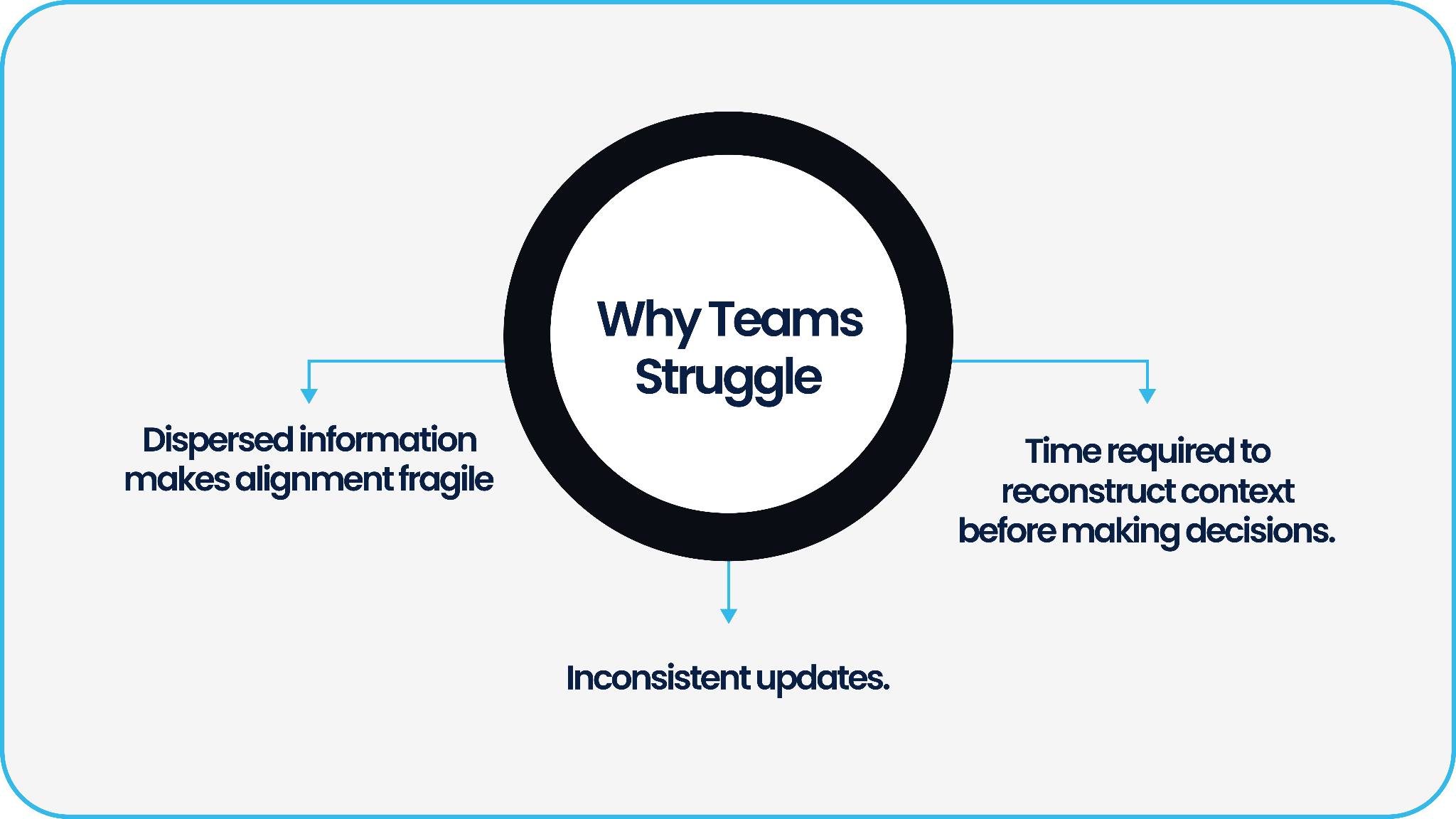
The more environments you observe, the clearer the pattern becomes.
Teams are not failing because they lack effort. They are struggling because dispersed information makes alignment fragile. Stakeholders are not frustrated by missing updates; they are frustrated by inconsistent updates. Leaders are not overwhelmed by complexity itself; they are overwhelmed by the time required to reconstruct context before making decisions.
In isolation, each case feels manageable. Across ten clients, it becomes undeniable.
Consulting exposes structural repetition in a way internal roles rarely do.
At some point, you stop asking how to refine the workaround. You start asking why the underlying structure does not exist.
The Signal That a Reusable System Is Required
There is a turning point in consulting: when experience shifts from adaptation to architecture.
You realise that your “custom” solution for one client looks remarkably similar to the one delivered for another. Templates standardise across engagements. Delivery oversight frameworks become portable rather than contextual.
That portability is a signal: the problem is systemic, not bespoke.
Continuing to solve a systemic problem with bespoke fixes is inefficient. It consumes time, requires repetition, and depends heavily on individual discipline.
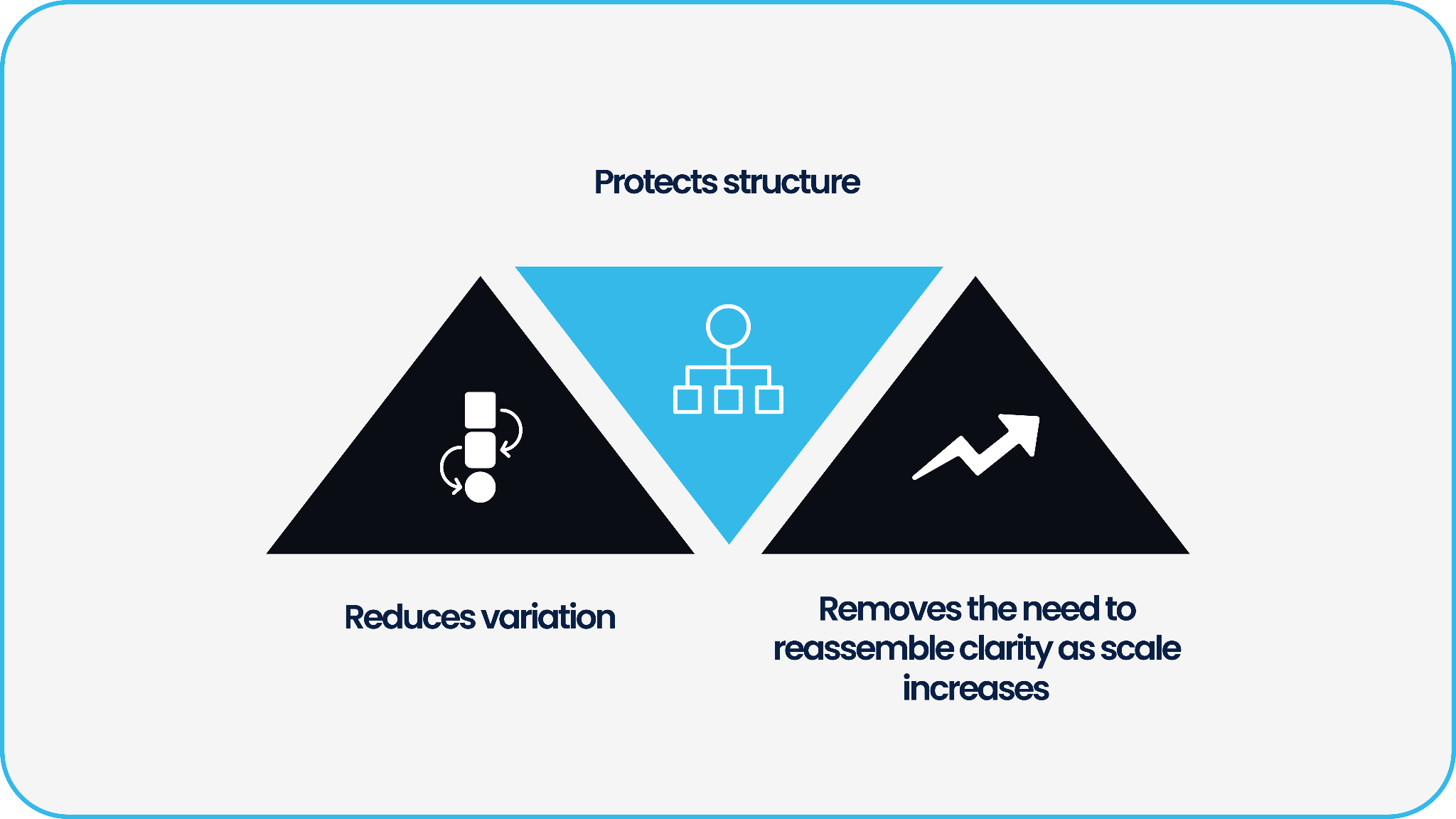
A reusable system, on the other hand, compounds value. It:
- Reduces variation
- Protects structure
- Removes the need to reassemble clarity as scale increases
Why Productising Services Is Not a Pivot
Moving from consulting into product is often framed as a shift in ambition. In reality, it is a shift in efficiency.
Productising occurs when pattern recognition meets scaling logic.
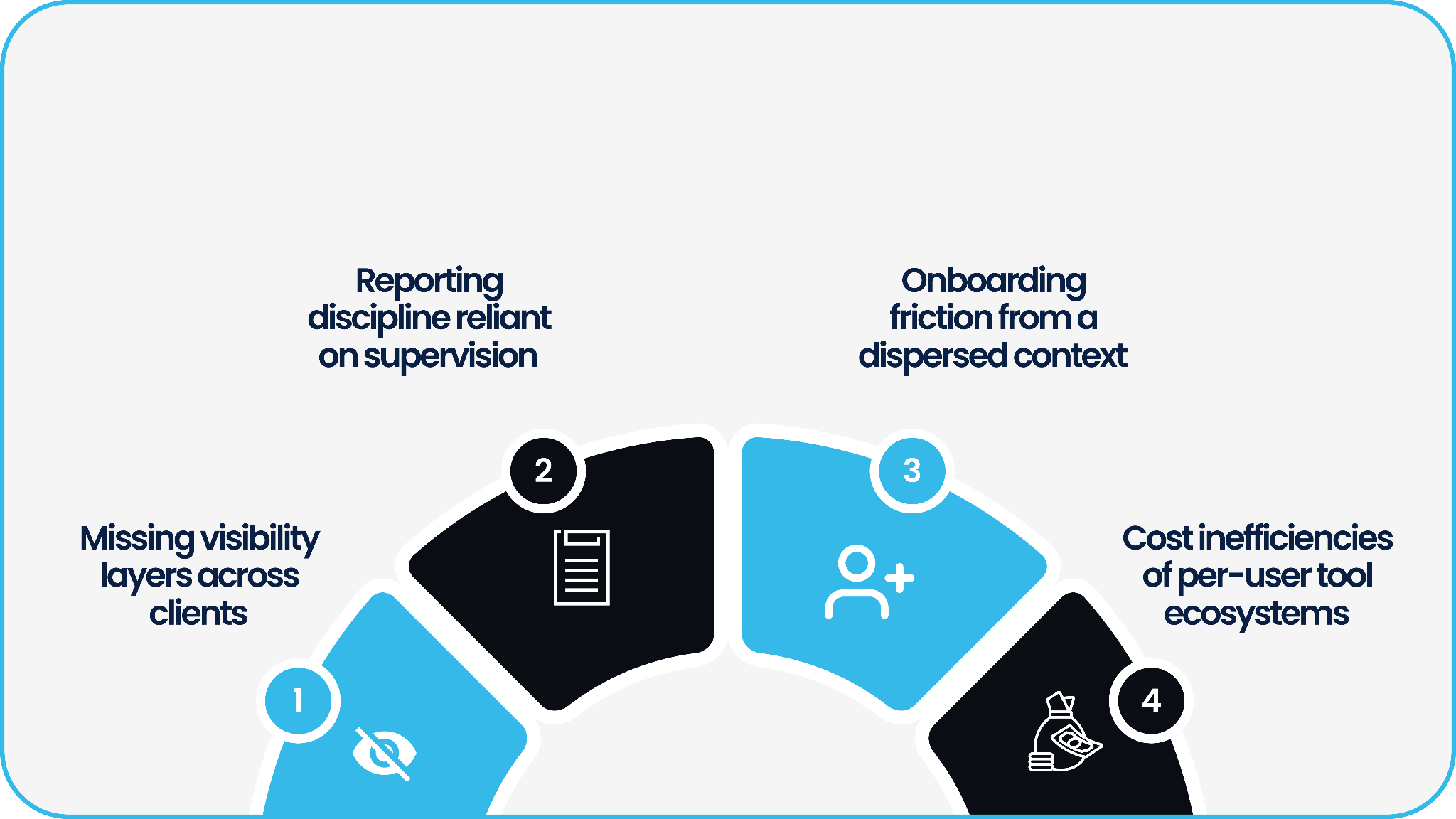
Through years of delivery work, including scaling operations at Assurdly, the structural gaps became predictable:
- Missing visibility layers across clients
- Reporting discipline reliant on supervision
- Onboarding friction from a dispersed context
- Cost inefficiencies of per-user tool ecosystems
Wholistic did not invent these problems. It formalised solutions that were already manually enforced across environments. Instead of repeatedly reapplying frameworks, the framework became embedded infrastructure.
When Repetition Becomes Responsibility
Seeing the same problem once is insight. Seeing it across multiple independent environments is a responsibility.
At that point, continuing to offer bespoke fixes feels incomplete. The sustainable contribution is to design the structure that prevents drift from the outset.
That is how Wholistic emerged.
Not from a desire to build a product, but from accumulated evidence: the same systemic gap existed across delivery firms and internal teams alike.
Consulting exposed the pattern. Product formalised it.


Ready to bring your best work together?
Sign up today and experience how Wholistic can transform your team's productivity!


