
Published on
May 18, 2026
How Non-Tech Teams Can Use Wholistic Without Technical Training
.jpg)
There is a quiet assumption behind most tools used to manage work. That structure must come first. Before anything meaningful can happen, someone needs to define workflows, configure systems, and translate reality into something the tool can understand.
For technical teams, this is often acceptable. For everyone else, it is friction.
Operations teams, client managers, programme leads, founders, and compliance teams. These are the people already managing delivery in real terms. They are coordinating, following up, resolving issues, and keeping things moving. Yet the systems they are expected to use rarely reflect how they work. Instead, they are asked to adapt to tools that were not designed with them in mind.
So the problem is not capability. It is translation.
Wholistic was built to remove that translation layer.
It starts from how work actually happens
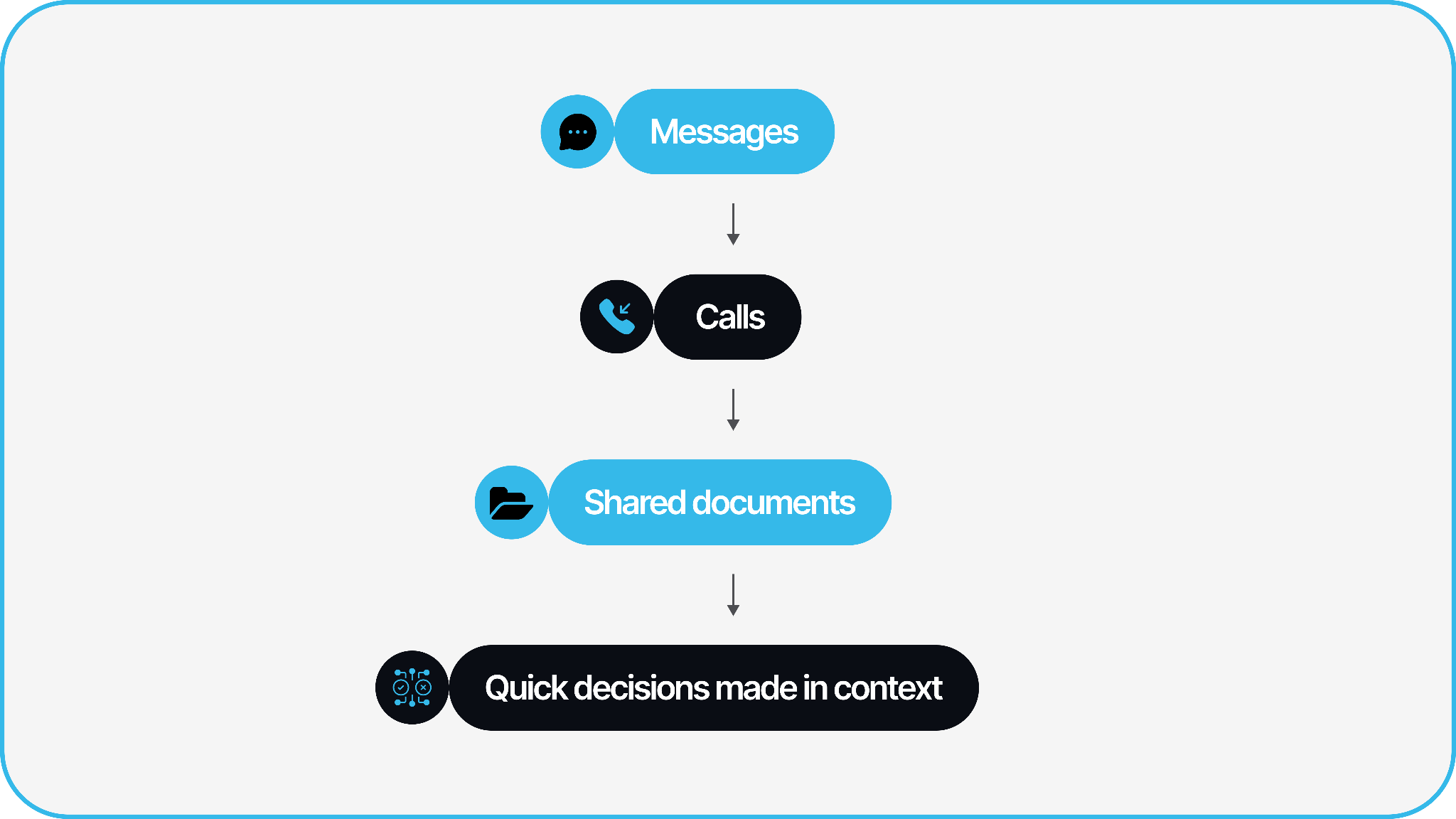
Work does not begin with a tool. It begins in conversation.
It moves through messages, calls, shared documents, and quick decisions made in context. Updates are given informally. Risks are noticed before they are documented. Progress is understood before it is recorded.
Most systems ignore this and ask you to reconstruct it later.
Wholistic connects to the tools you already use and brings that activity into one place, not as isolated inputs but as a continuous stream of meaning.
You are not recreating work inside a system. The system is understanding the work as it happens.
No technical language, no system overhead
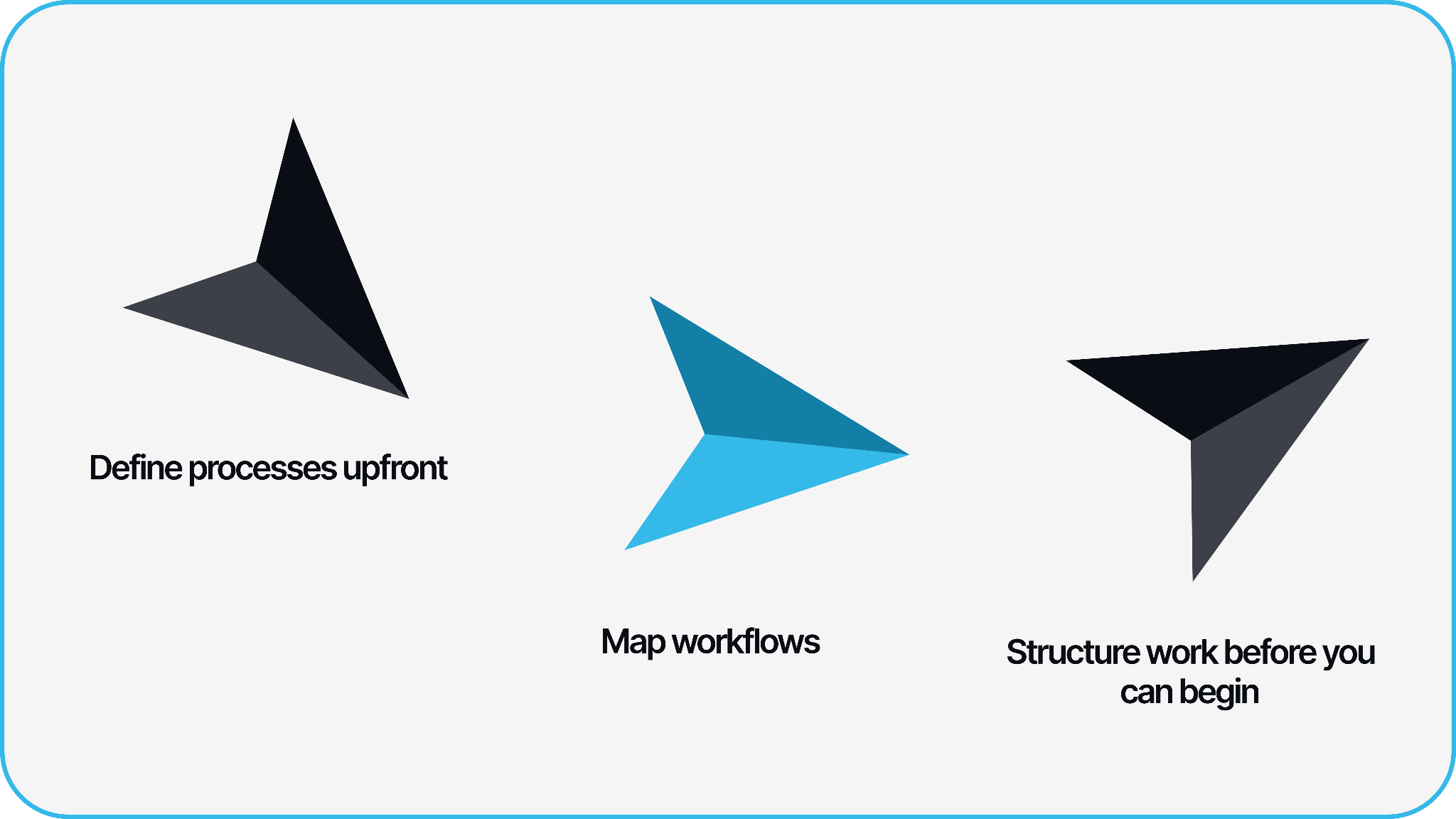
The barrier with most tools is not just complexity; it is the expectation that you must think like the system.
You are expected to define processes upfront, map workflows, and structure work before you can begin. This creates overhead that often has little to do with the work itself.
Wholistic removes that expectation.
You are not filling forms or configuring stages. You are simply stating what is happening, and the system interprets it within the context it already understands.
This is where adoption becomes natural. There is no behavioural shift required before value is seen.
Reports without manual effort
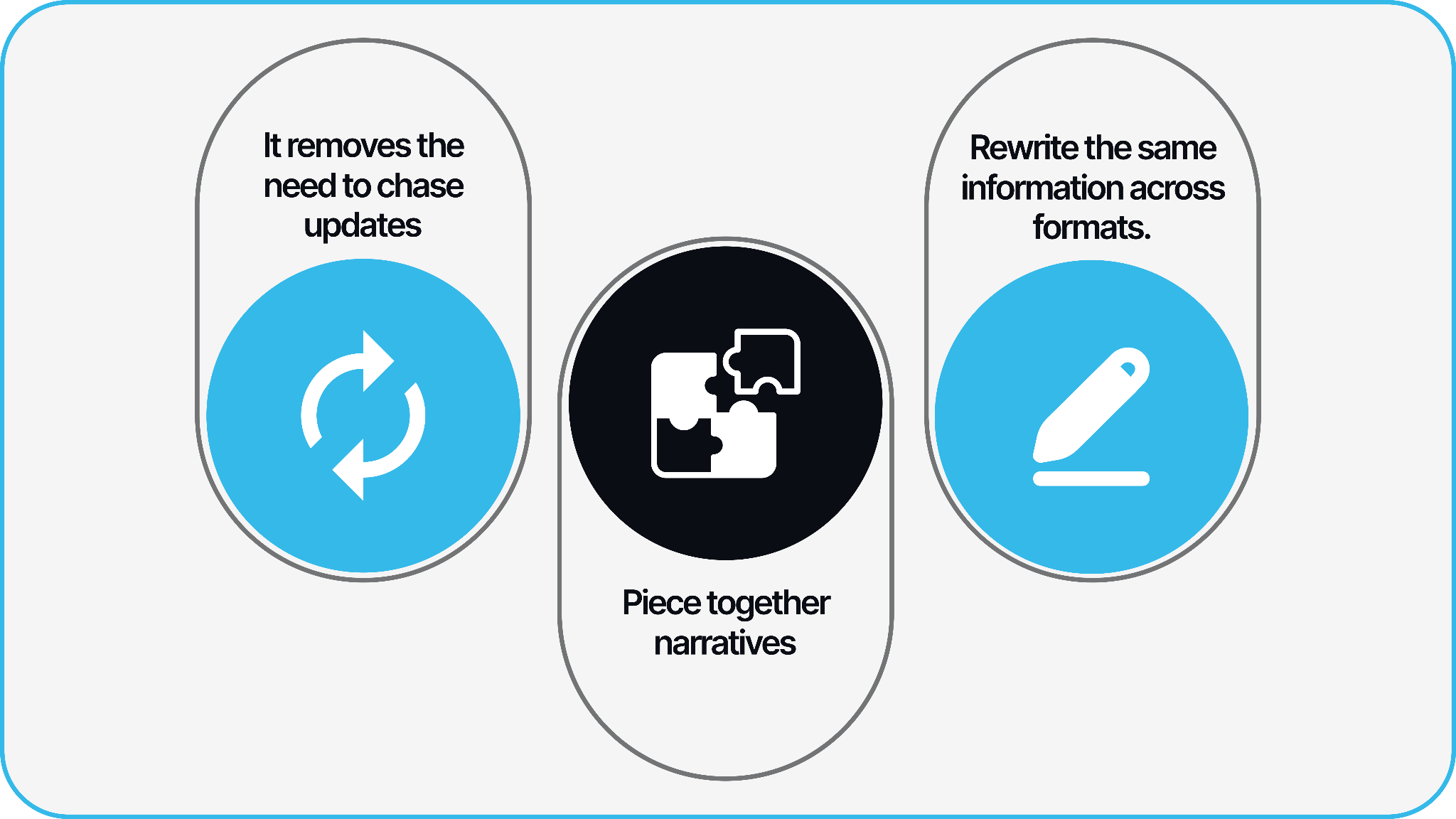
Reporting is one of the clearest points of strain for non-technical teams.
Not because the work is unclear, but because capturing it accurately requires effort. Updates are scattered across conversations, documents, and individual inputs. Bringing this together into something structured often becomes a separate task entirely.
And by the time it is done, it is already a step removed from reality.
With Wholistic, reporting becomes a byproduct of the work itself. Because activity is already being understood in context, reports are generated from what actually happened, not what is remembered or reconstructed later.
It removes the need to chase updates, piece together narratives, or rewrite the same information across formats.
Most teams do not struggle because they lack tools. They struggle because the effort to keep those tools updated becomes the work itself.
Visibility through conversation, not dashboards
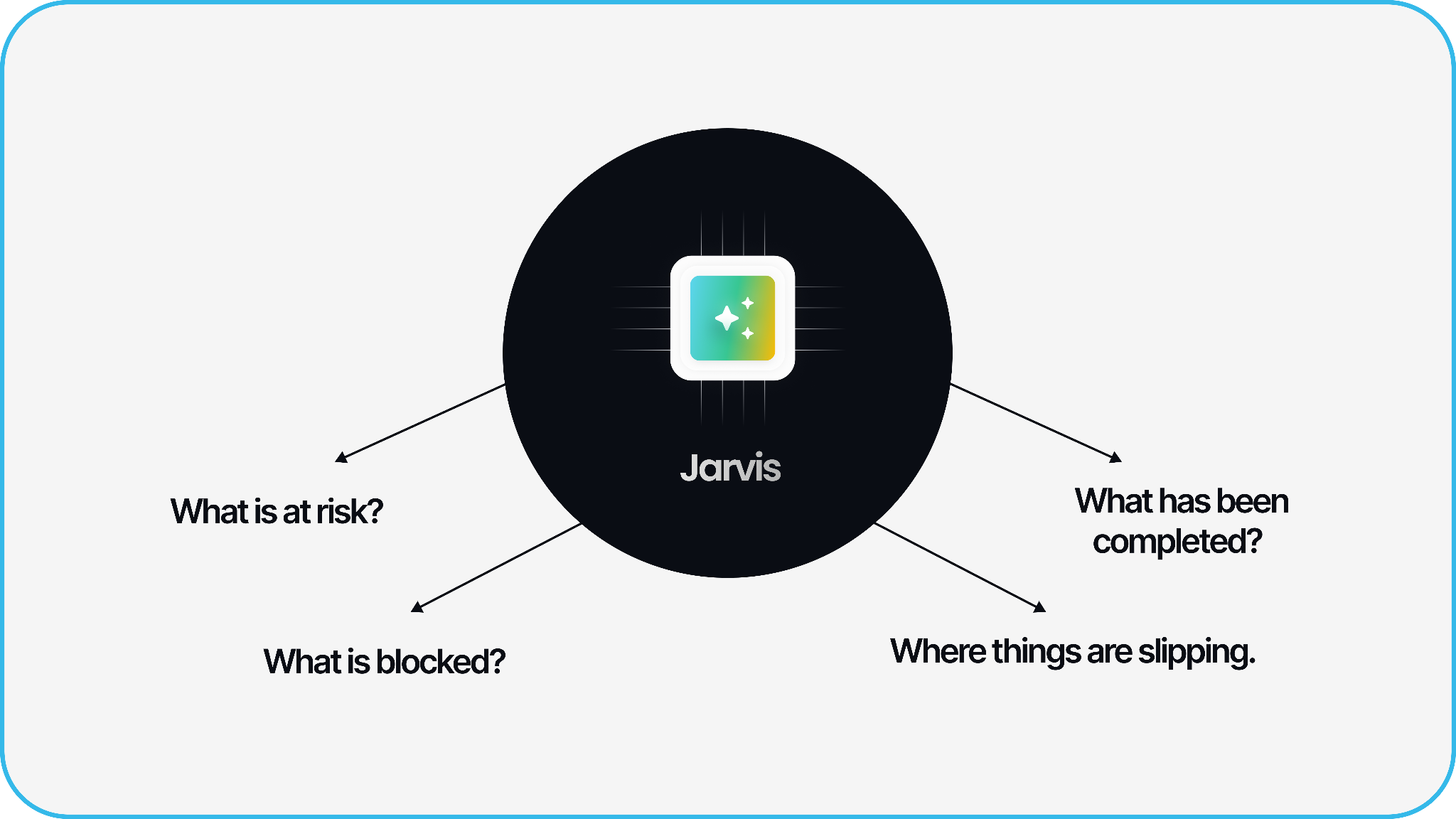
Most systems attempt to solve visibility through dashboards.
But dashboards assume interpretation. They require you to know what to look for, how to read it, and how to connect different signals into a meaningful picture.
For many non-technical stakeholders, this creates more distance, not clarity.
Wholistic approaches this differently.
Instead of navigating dashboards, you interact with Jarvis, the AI DeliveryOps assistant embedded within the platform. You ask direct questions about your work. What is at risk? What is blocked? What has been completed? Where things are slipping.
And you get answers grounded in the actual flow of activity.
It removes the need to interpret data and replaces it with something simpler. Understanding through conversation.
Built for how work actually moves
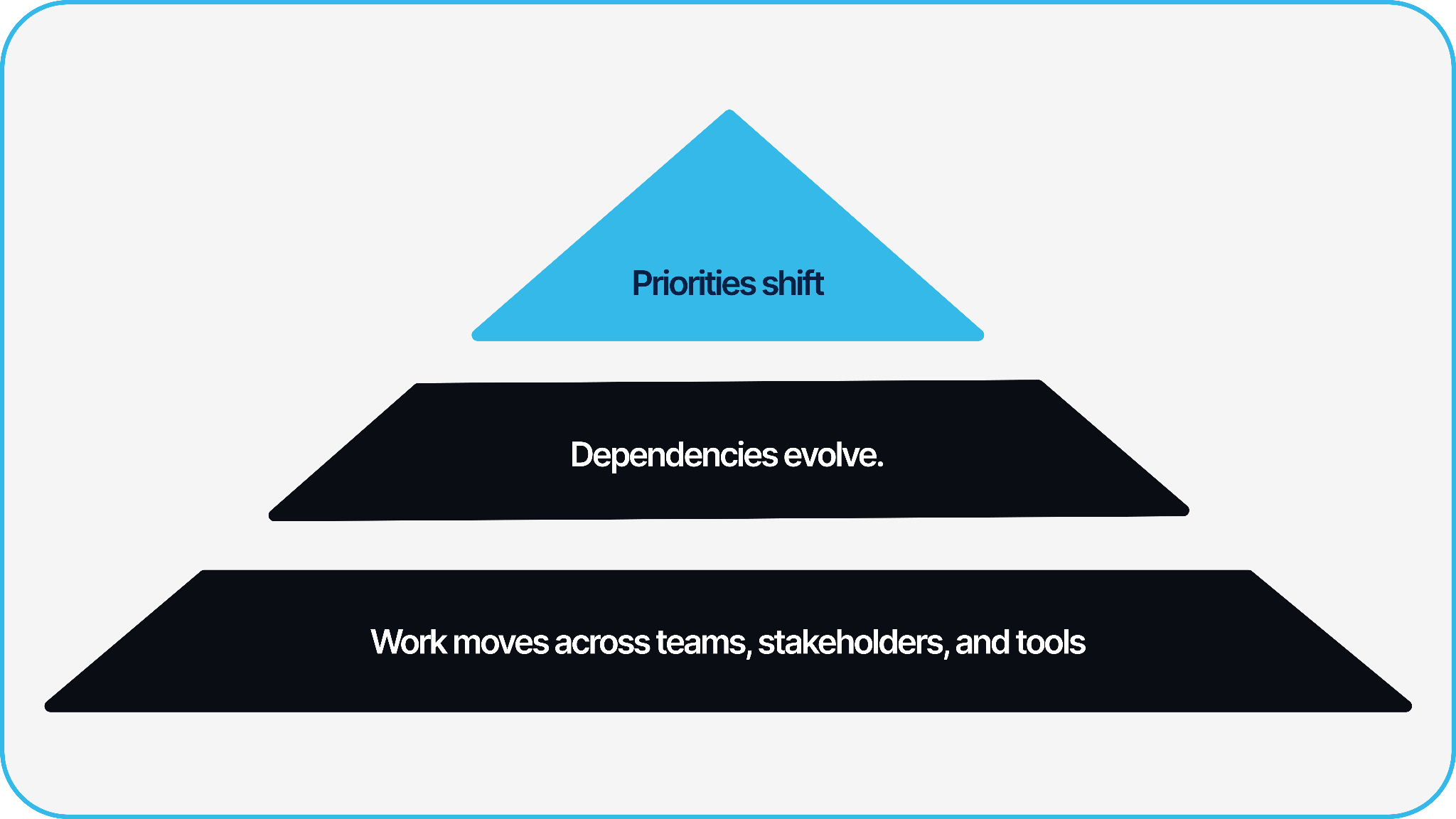
Across industries, project delivery is rarely linear.
Work moves across teams, stakeholders, and tools. Priorities shift. Dependencies evolve. Communication is continuous and often informal. Trying to force this into rigid systems usually creates more work than it removes.
What tends to work better is a system that can sit within that movement and make sense of it without requiring it to be simplified first.
Wholistic adapts to execution as it happens. It brings clarity to work in motion, without demanding structure before progress.
Where this becomes most useful
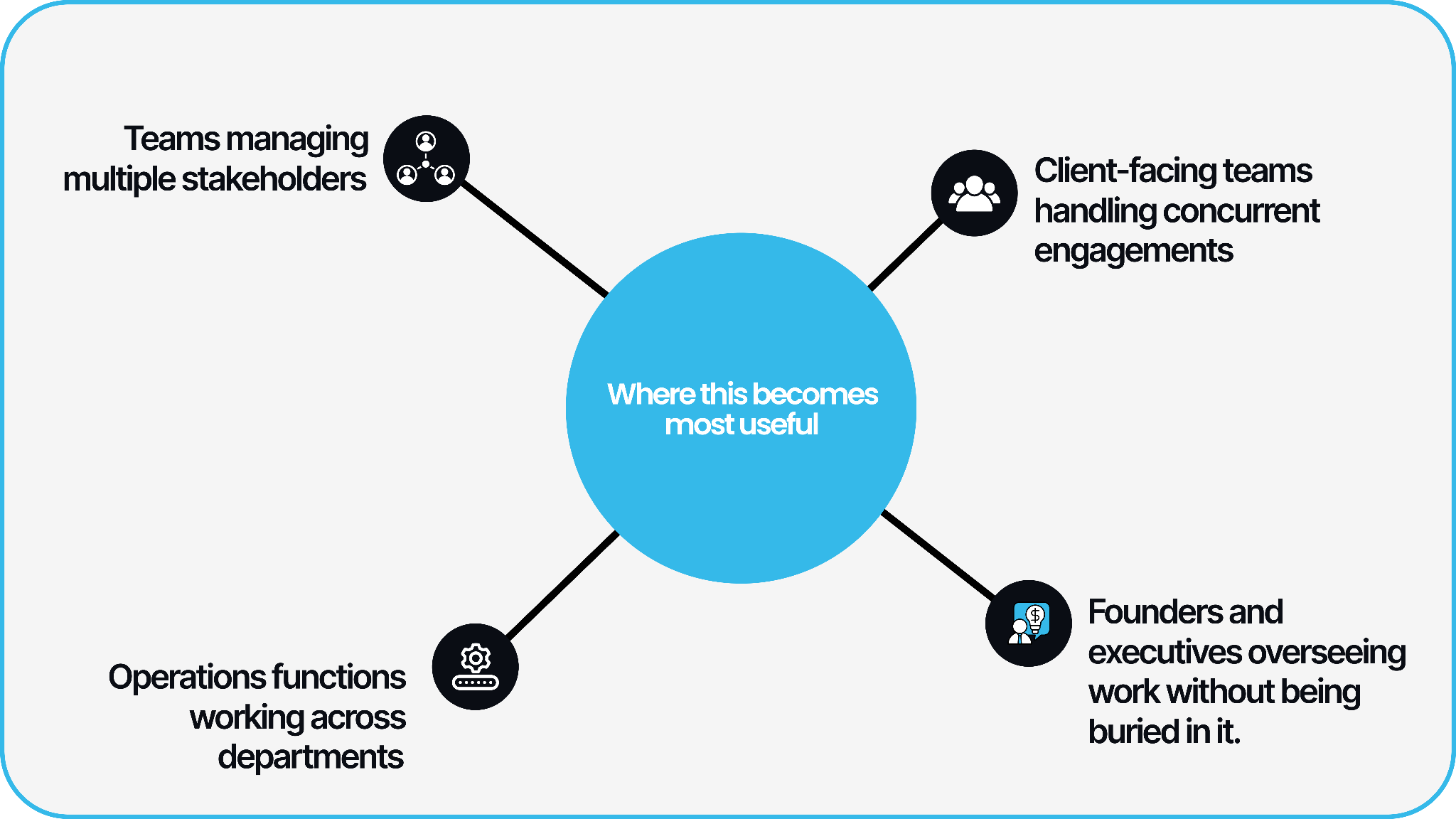
You see the impact most clearly in environments where coordination is the real challenge.
Teams managing multiple stakeholders. Operations functions working across departments. Client-facing teams handling concurrent engagements. Founders and executives overseeing work without being buried in it.
In these settings, the issue is not a lack of tools. It is fragmentation and the effort required to make sense of it.
Wholistic reduces both.
The real shift
Non-technical teams do not need to become technical to manage work effectively.
They need systems that understand context, reduce the effort required to gain clarity, and fit into how work already happens.
That is the shift Wholistic represents.
It is not a tool you learn.
It is a layer that makes sense of the work you are already doing.
And that is why adoption does not need to be forced. It happens because the system begins to remove friction almost immediately.


Ready to bring your best work together?
Sign up today and experience how Wholistic can transform your team's productivity!


