
Published on
May 25, 2026
What Execution Really Looks Like Behind The Scenes

There is a version of execution that looks clean from the outside, one where plans are clearly defined, timelines are set, updates are shared at regular intervals, and progress appears to move in a straight line. From a distance, it gives the impression that work is unfolding exactly as expected, guided by structure, discipline, and control.
That version rarely exists in practice.
What execution actually looks like, especially in environments where multiple stakeholders, dependencies, and moving parts are involved, is far less orderly. It is fluid, sometimes messy, often unpredictable, and heavily dependent on how quickly teams can respond to what is changing in real time. This is not something you arrive at from theory or frameworks; it is what becomes obvious when you have spent enough time in the middle of delivery, not observing it from the outside, but carrying the weight of it.
Execution Is Coordination, Not Just Completion
Execution is often reduced to the idea of getting tasks done, but that framing misses where most of the real effort sits. The task itself is usually the simplest part. What surrounds it is where complexity begins to show.
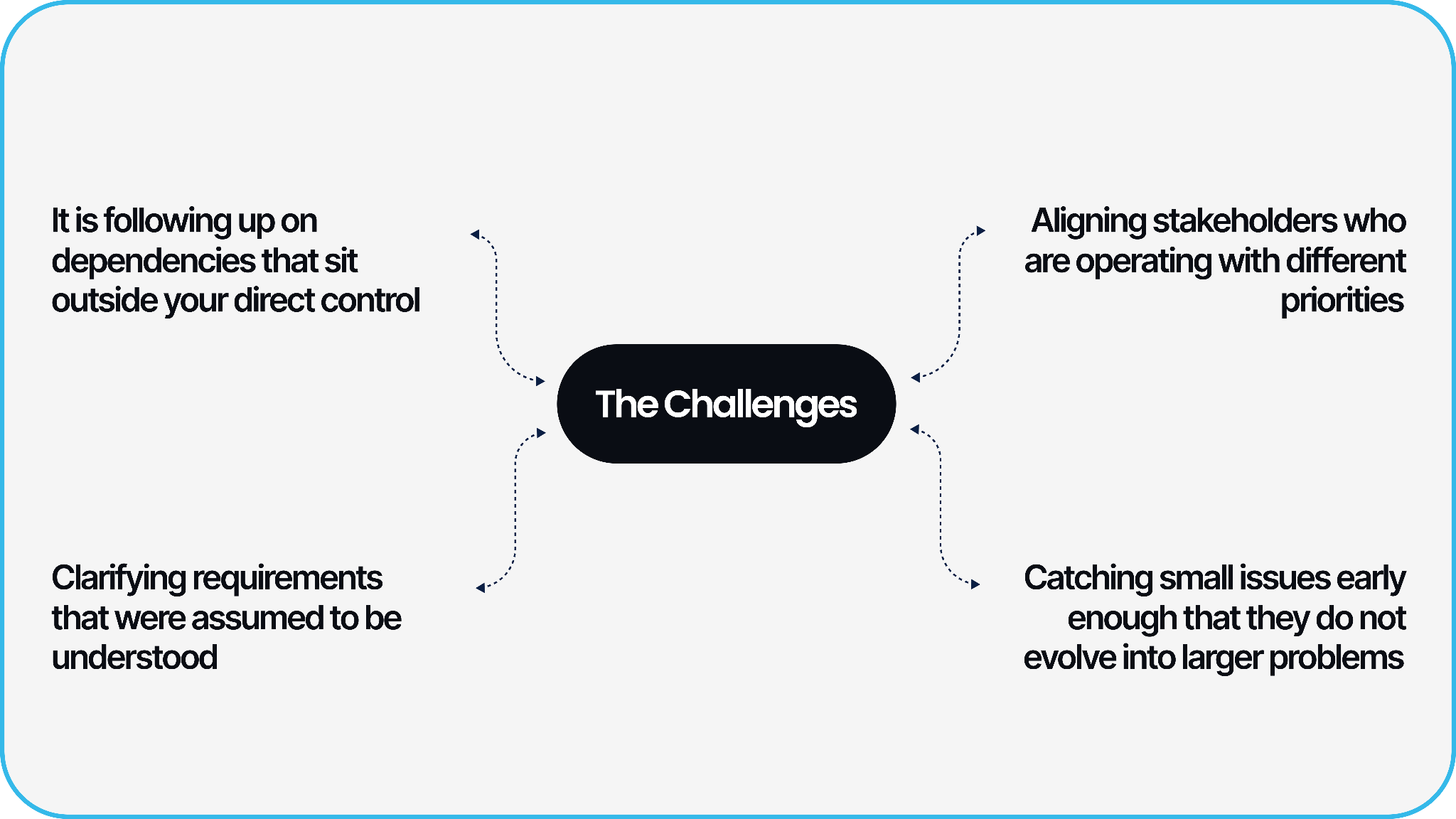
Execution, in practice, is coordination. It is following up on dependencies that sit outside your direct control, clarifying requirements that were assumed to be understood, aligning stakeholders who are operating with different priorities, and catching small issues early enough that they do not evolve into larger problems. It is a continuous effort to keep everything moving in sync, even when the conditions are constantly shifting.
This layer of work rarely fits neatly into systems because it does not happen in structured steps. It happens in conversations, in quick decisions, in moments of context that are understood but not always documented. Yet it is this layer that determines whether work moves forward smoothly or begins to slip.
The Work You Do That No One Sees
Behind every update that reads “on track” is a series of actions that are almost never visible.
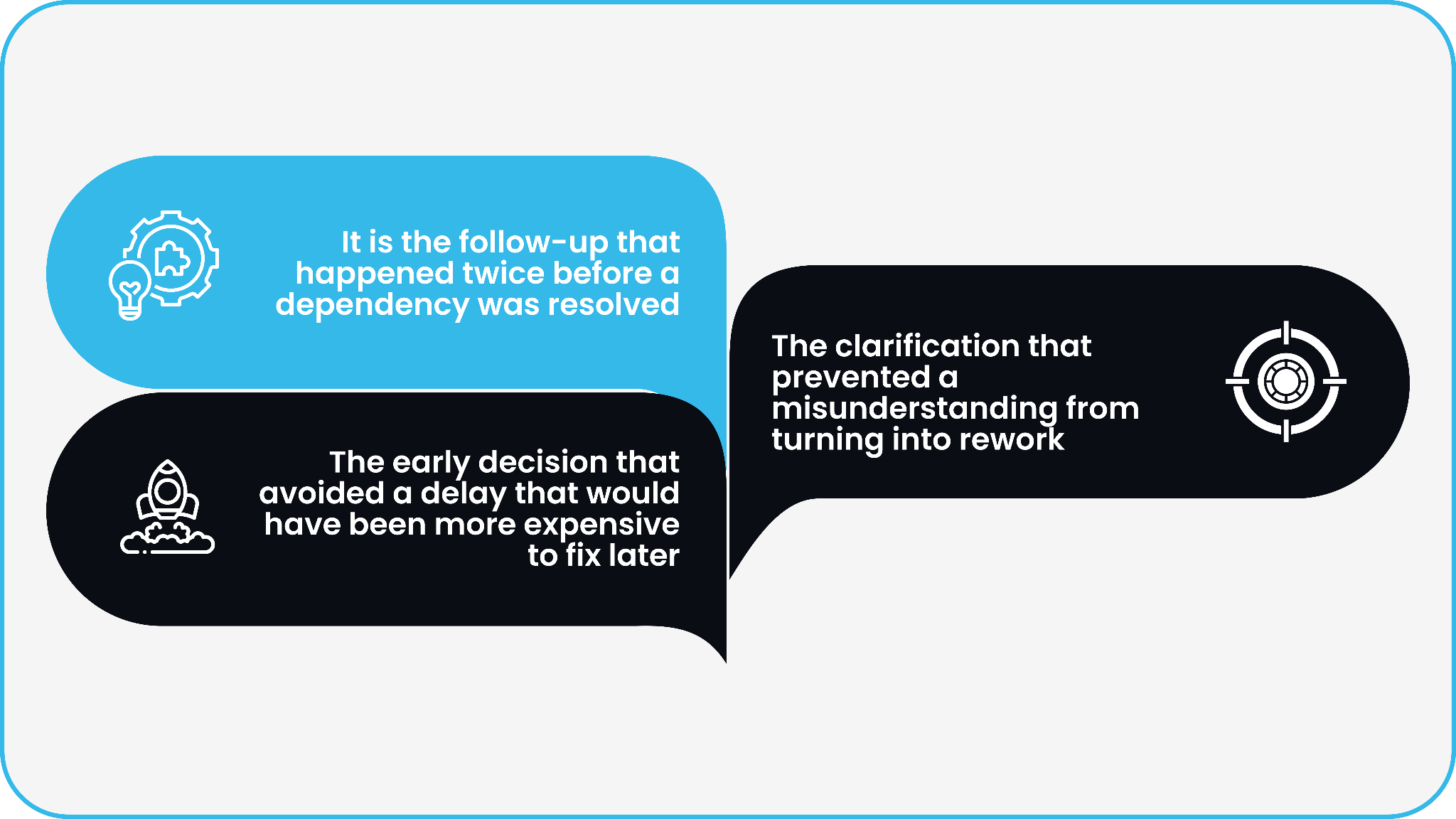
It is the follow-up that happened twice before a dependency was resolved, the clarification that prevented a misunderstanding from turning into rework, the early decision that avoided a delay that would have been more expensive to fix later. These actions are rarely captured in a structured way because they do not naturally fit into predefined fields or workflows. They exist across messages, calls, and individual awareness.
From the outside, what is seen is progress. From the inside, what is happening is constant intervention to keep that progress intact.
Over time, this becomes the quiet reality of execution. The work that keeps things moving is often the least visible, yet the most critical.
Where Execution Starts To Break
Execution rarely fails in obvious or dramatic ways. It does not usually collapse all at once. It begins to slip.
A follow-up that should have happened today is delayed by a couple of days. A dependency that seemed minor becomes critical because it was not tracked closely enough. A delay is noticed, but only after it has already affected other parts of the work. None of these moments feels significant in isolation, but together they begin to compound.
These are not failures of effort or intent. They are failures of visibility.
When there is no clear, shared understanding of what is happening across all moving parts, teams are forced into a reactive position. By the time an issue is fully visible, it has already taken shape, and the cost of resolving it is higher than it needed to be.
Why Systems Often Do Not Help
Most systems are built around the idea of structure. They expect workflows to be defined, tasks to be tracked, and progress to be updated in a way that keeps everything visible within the system.
In theory, this should create clarity.
In practice, it introduces another layer of work.
Because maintaining the system becomes an activity in itself, separate from the actual execution. Teams are not only responsible for doing the work, but also for translating that work into a format the system can understand. Over time, this creates friction, and more importantly, it creates a gap between what is happening in reality and what is reflected in the system.
That gap is where clarity is lost.
What Building Wholistic Made Clear
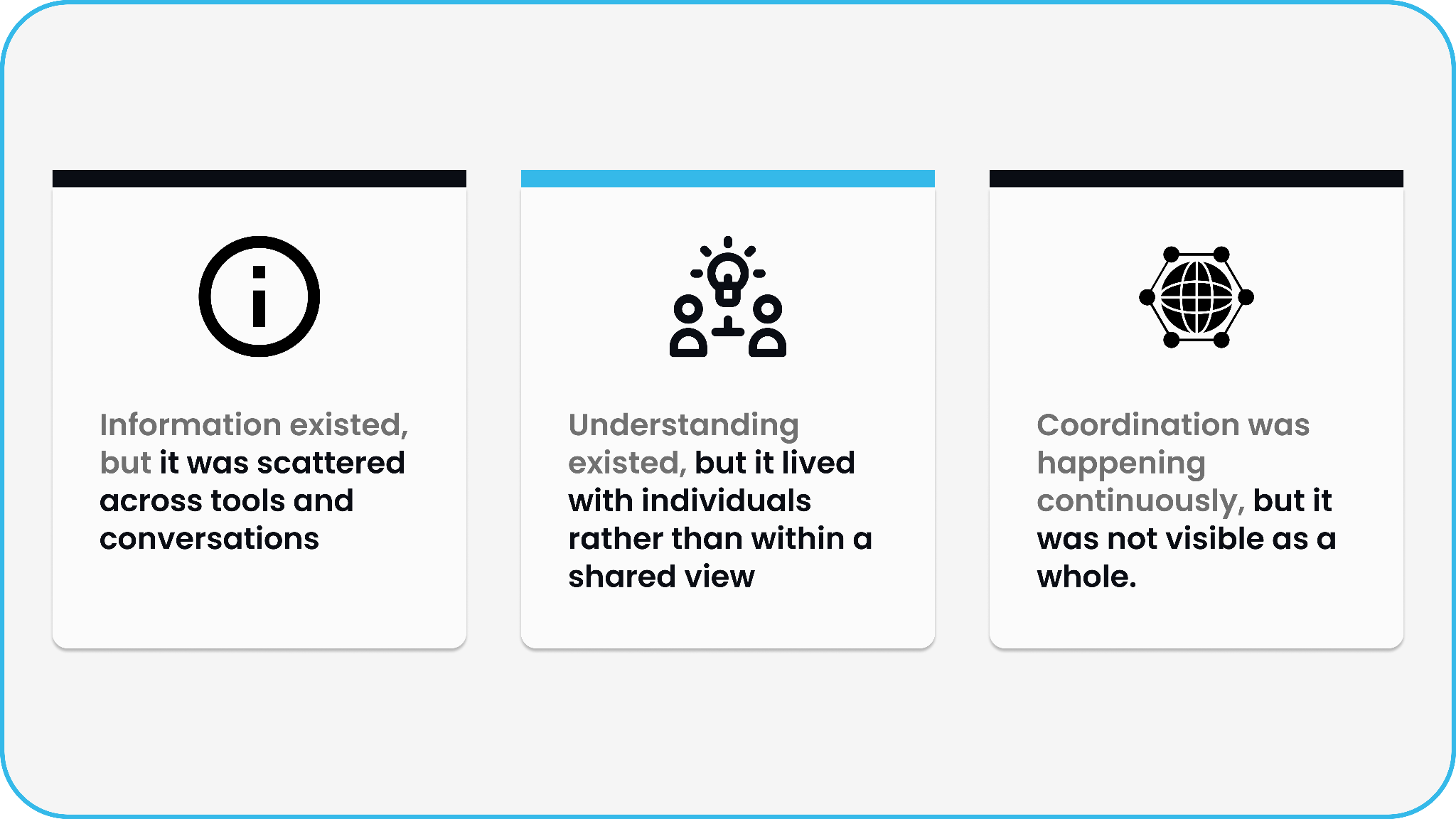
Working across different projects, teams, and industries, one pattern remained consistent. The challenge was not that teams lacked capability or effort; it was that the clarity required to manage execution was always fragmented.
Information existed, but it was scattered across tools and conversations. Understanding existed, but it lived with individuals rather than within a shared view. Coordination was happening continuously, but it was not visible as a whole.
Wholistic came out of this realisation, not as a better way to track tasks, but as a way to bring together the context that already exists and make sense of it without requiring teams to reconstruct their work.
Execution Needs Understanding, Not More Input
When execution becomes difficult, the instinct is often to introduce more structure, more processes, more updates, and more reporting layers in an attempt to regain control.
But this rarely leads to better outcomes.
Instead, it increases the overhead without improving the underlying clarity. The problem is not a lack of input; it is a lack of understanding.
What changes execution is the ability to see what is happening as it unfolds, across conversations, decisions, and actions, without needing to chase information or piece it together manually. It is the shift from managing work through constant input to understanding work through the context it generates.
What This Changes
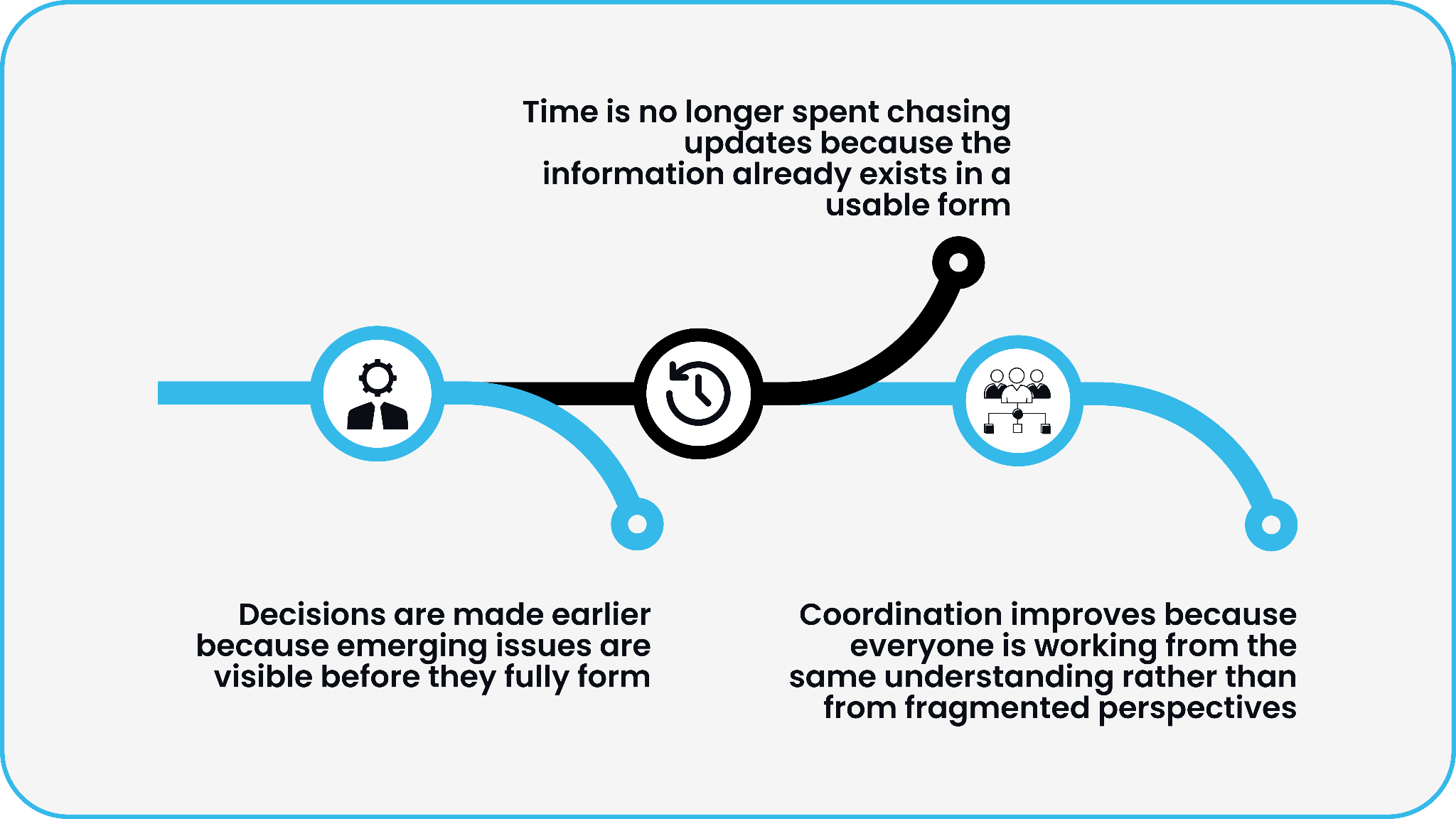
When there is a clear understanding of execution, the way teams operate begins to change in subtle but important ways.
Decisions are made earlier because emerging issues are visible before they fully form. Time is no longer spent chasing updates because the information already exists in a usable form. Coordination improves because everyone is working from the same understanding rather than from fragmented perspectives.
The work itself does not necessarily become simpler, but the effort required to manage it reduces significantly.
The Part That Is Often Missed
From the outside, strong execution is often attributed to discipline, structure, or process.
From the inside, it is driven by awareness.
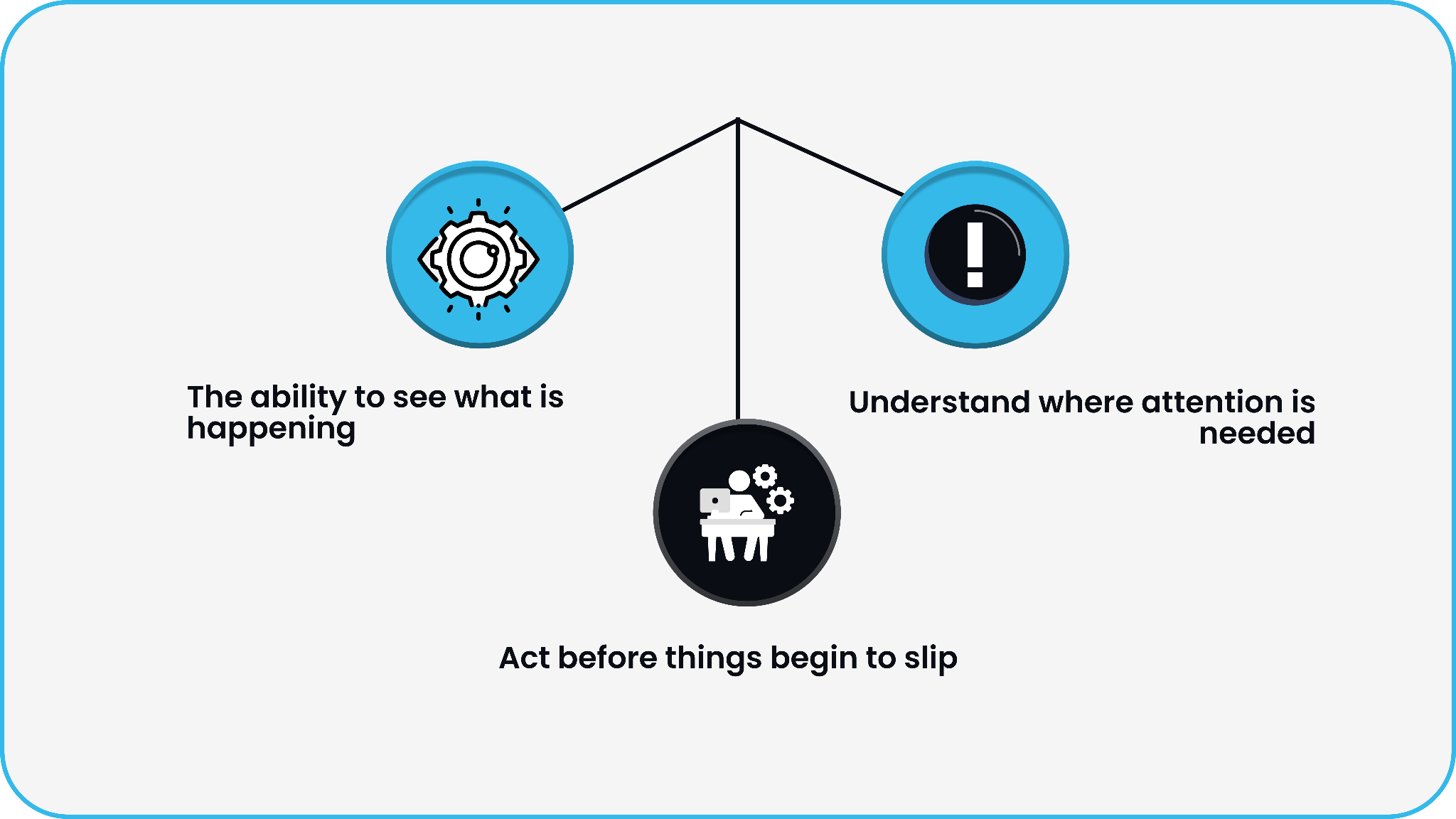
It is the ability to see what is happening, understand where attention is needed, and act before things begin to slip. This is the layer that most systems fail to capture, not because it is unimportant, but because it does not naturally fit into structured input.
Yet once this layer is visible, it changes how teams operate entirely.
The Reality Behind It
Execution is not clean, and it is rarely linear or predictable. It is shaped by moving parts, shifting priorities, and continuous coordination.
But it becomes manageable when it is clearly understood.
That clarity is what separates teams that are constantly reacting from those that are able to move with intent. It is what allows execution to feel controlled even when the environment itself is not.
And ultimately, it is what everything I have built has been trying to solve.


Ready to bring your best work together?
Sign up today and experience how Wholistic can transform your team's productivity!


