
Published on
August 13, 2026
Why Delivery Discipline Compounds Over Time
Delivery discipline is easy to misread.
To some teams, it sounds like control. More meetings. More reporting. More approval steps. More things to update before the real work can move. So when people hear the word discipline, they often hear bureaucracy.
But that is not what good delivery discipline is.
At its best, discipline is the thing that makes work lighter. It is the habit of writing down the decision while everyone still remembers it. It is the rhythm of checking what has changed before a plan becomes outdated. It is the practice of making ownership clear, not because people need policing, but because unclear ownership always becomes expensive later.
The value does not always show up immediately. One clearer update may not change a business. One properly captured decision may not feel like a major win. One early blocker may not look dramatic. But over time, these small habits change how a team operates.
They compound.
Fewer Surprises, Less Recovery Work
Most delivery problems do not begin as big problems.
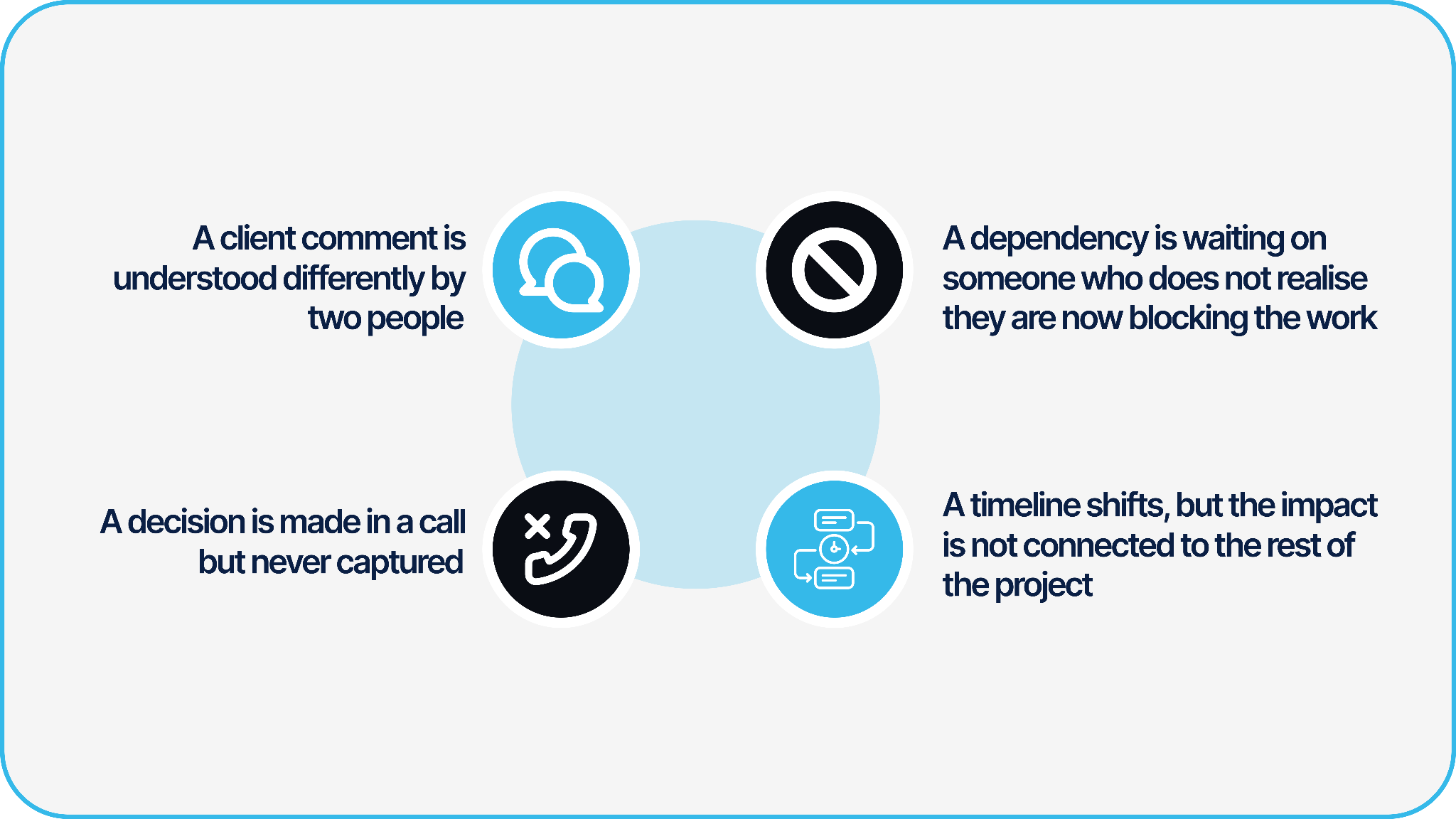
They usually start quietly. A client comment is understood differently by two people. A dependency is waiting on someone who does not realise they are now blocking the work. A decision is made in a call but never captured. A timeline shifts, but the impact is not connected to the rest of the project.
Nothing looks broken yet. The team is still moving. The updates still sound fine. Then, a few weeks later, everyone is trying to understand how the project got here.
This is why discipline matters. It helps teams catch the small gaps while they are still small. Not through panic, and not through unnecessary process, but through a steady operating rhythm that makes the state of the work easier to see.
In project delivery, surprises are expensive because they create recovery work. The team is no longer only doing the work. They are explaining what happened, rebuilding context, calming stakeholders, renegotiating timelines, and trying to recover confidence.
A disciplined team does not remove every surprise. That would be unrealistic. But it reduces the number of surprises that come from avoidable confusion.
Better Forecasting Starts With Better Visibility
Forecasting is not just about choosing a date. It is about knowing how much confidence the team should have in that date.
A delivery lead can say, “we should be done by Friday”, but the real question is what sits behind that statement. Are the dependencies moving? Are approvals clear? Are the risks known? Has the team done similar work before? Is the forecast based on evidence, or is it based on hope and pressure?
This is where discipline improves the quality of leadership. It gives teams better inputs. When decisions are captured, milestones are visible, blockers are tracked, and progress is connected to actual delivery signals, forecasting becomes less of a guess.
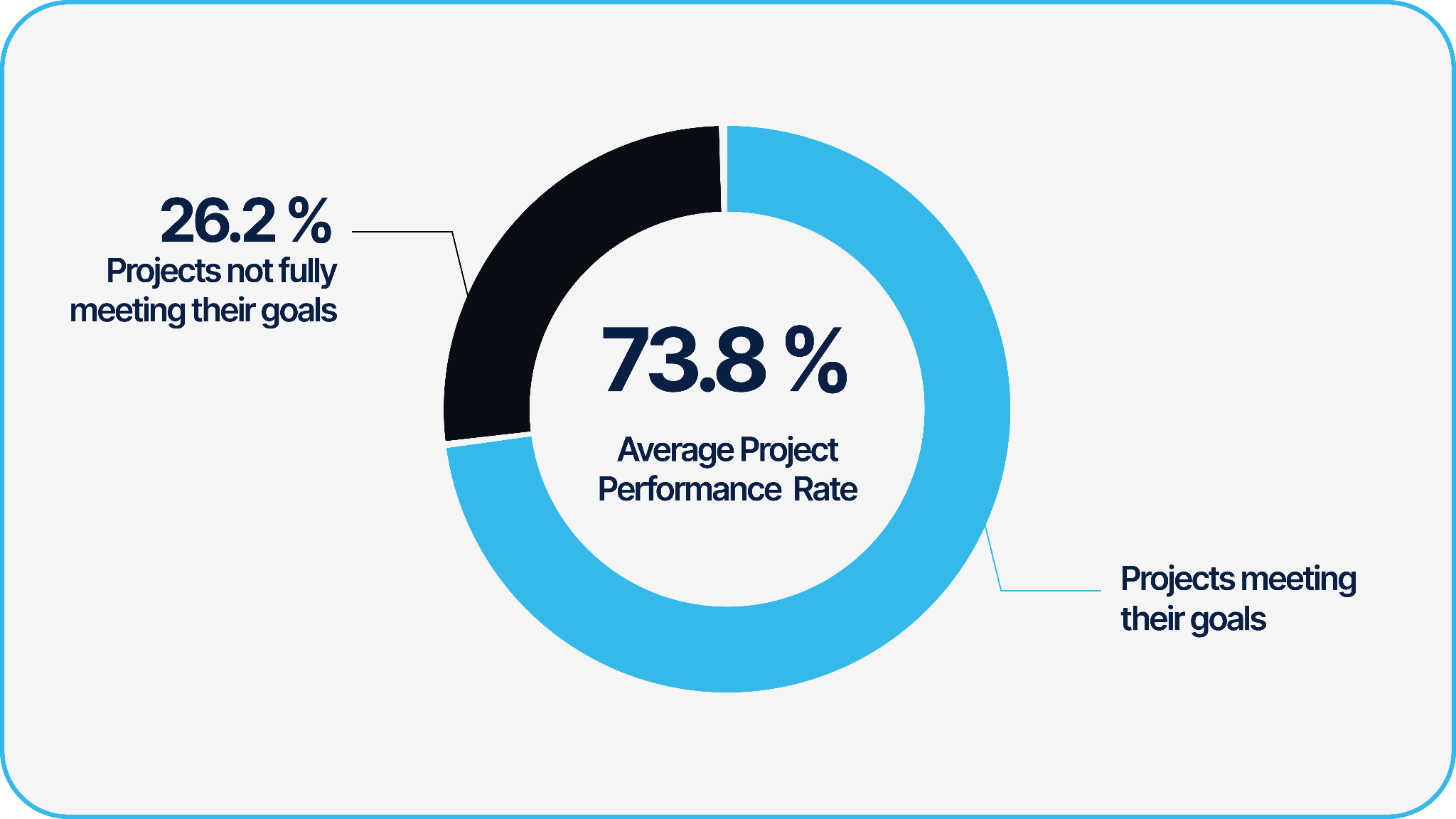
The Project Management Institute’s 2024 Pulse of the Profession reported an average project performance rate of 73.8% across respondents. That number is a useful reminder that delivery performance is not automatic, even in organisations that are actively managing projects. It has to be designed, supported, and improved over time.
Discipline helps because it gives teams a clearer memory. Not memory held in one person’s head, but operational memory that the team can use. What happened before? Where did the delay start? Which assumptions changed? What kind of work usually takes longer than expected?
That kind of visibility makes the next forecast better than the last one.
Stronger Margins Come From Less Waste
Margins are not only protected by pricing. They are protected by how well the work is delivered.
A project can be profitable on paper and still lose margin through delivery drag. Rework takes hours. Late clarification takes hours. Poor handovers take hours. Status chasing takes hours. Misalignment takes hours. The cost is not always obvious in the moment, but it builds.
This is why delivery discipline is commercial, not just operational.
When teams are clearer earlier, they spend less time recovering later. When ownership is understood, fewer things fall between people. When decisions are captured, fewer conversations have to be repeated. When reporting is connected to the real state of the work, leaders can make decisions before the project becomes harder to protect.
McKinsey’s research on large IT projects found that they ran, on average, 45% over budget and 7% over time, while delivering 56% less value than predicted. Not every team is running projects at that scale, but the lesson travels well: when delivery loses control, value leaks.
Discipline is one way teams protect that value. Not by slowing the work down, but by reducing the hidden waste around it.
Discipline Builds Trust Before It Is Needed
There is another effect that is harder to measure but easy to feel.
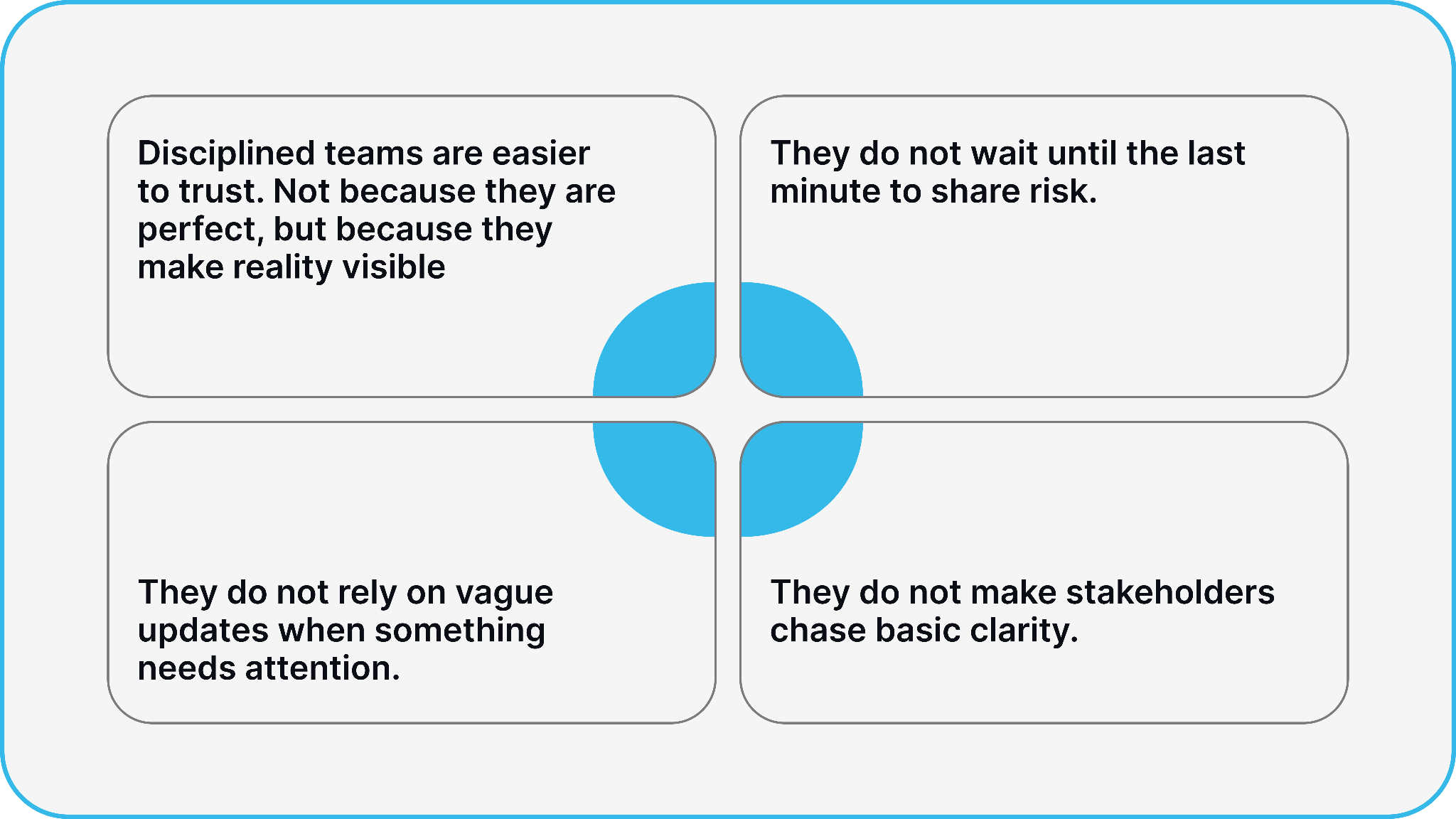
Disciplined teams are easier to trust.
Not because they are perfect, but because they make reality visible. They do not wait until the last minute to share risk. They do not rely on vague updates when something needs attention. They do not make stakeholders chase basic clarity. They can say what has changed, what is blocked, what is on track, and what needs a decision.
That kind of trust compounds too.
A client who trusts the delivery rhythm gives the team more room to solve problems. A leader who trusts the information can make decisions faster. A team that trusts its own operating system spends less time second-guessing and more time moving.
This is where discipline becomes leverage. It creates the conditions for speed without chaos.
Where Wholistic Fits
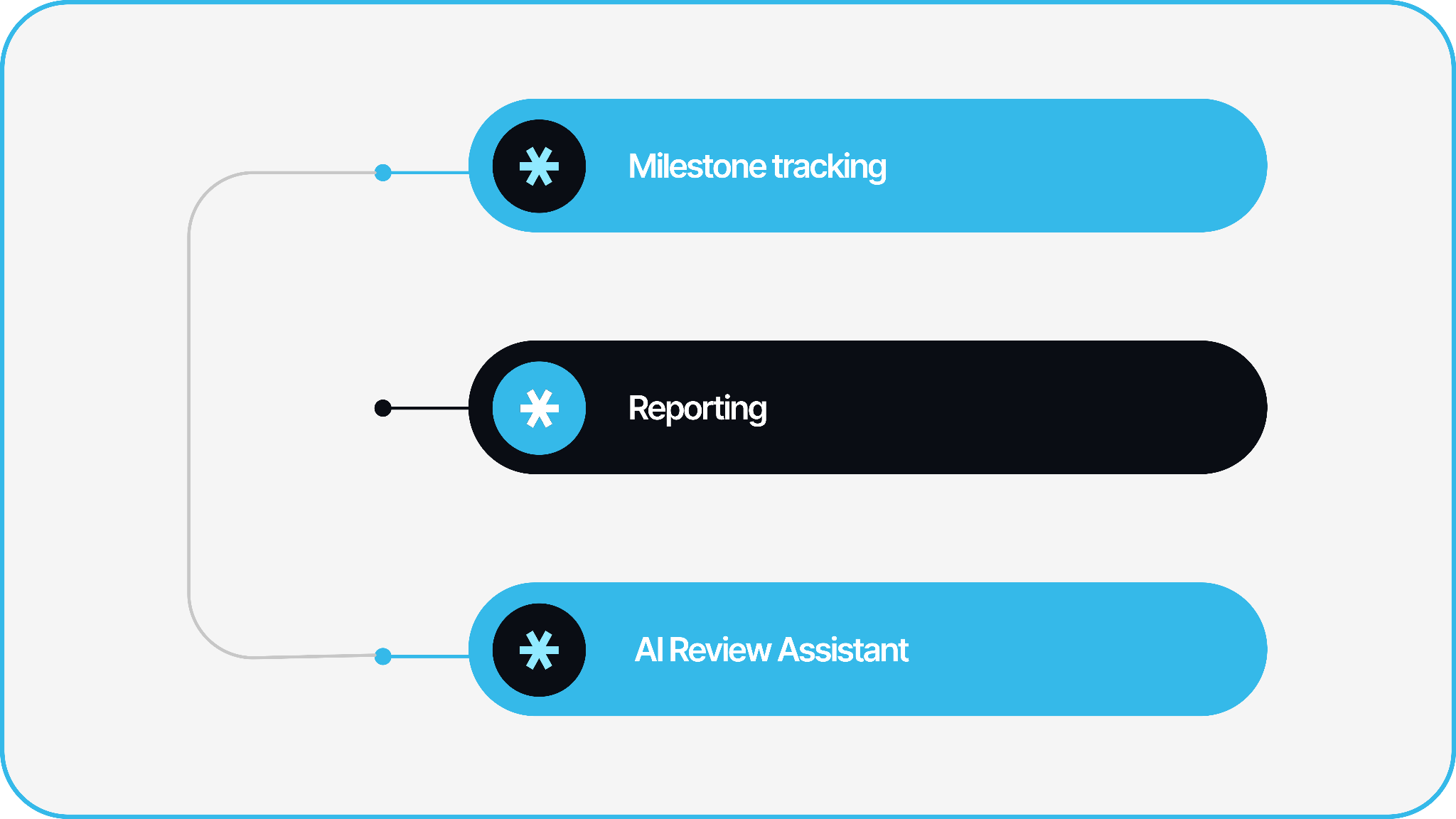
Wholistic is built around a simple view of execution: delivery is not just the completion of tasks. It is the movement of decisions, dependencies, milestones, updates, risks, resources, and reports.
When those pieces are scattered, discipline becomes harder than it needs to be. The team may be trying to operate well, but the context is spread across too many places. Someone still has to chase, remember, interpret, and rebuild the picture manually.
Wholistic’s role is to make that operating picture clearer. Milestones help teams see progress around meaningful delivery points. Connected context makes it easier to understand what has changed and why it matters. Reporting becomes less about starting from a blank page and more about turning the reality of the work into something useful for clients, leaders, and teams.
That matters because discipline should not feel like a separate layer sitting on top of the work. It should be part of how the work moves.
The goal is not bureaucracy. The goal is leverage.
The Value Builds Quietly
Delivery discipline rarely feels exciting at the beginning. It looks like small things done consistently: capture the decision, clarify the owner, track the milestone, surface the blocker, update the forecast, explain the change.
But over time, those habits change the shape of the work.
There are fewer surprises. Forecasts become more honest. Margins are easier to protect. Trust becomes easier to maintain. Teams spend less energy recovering from confusion and more energy delivering with confidence.
That is why delivery discipline compounds over time.
Not because the team has more process, but because the team has less avoidable chaos. Not because people are being controlled, but because the work is becoming clearer. And in delivery, clarity is one of the strongest forms of leverage a team can build.


Ready to bring your best work together?
Sign up today and experience how Wholistic can transform your team's productivity!


